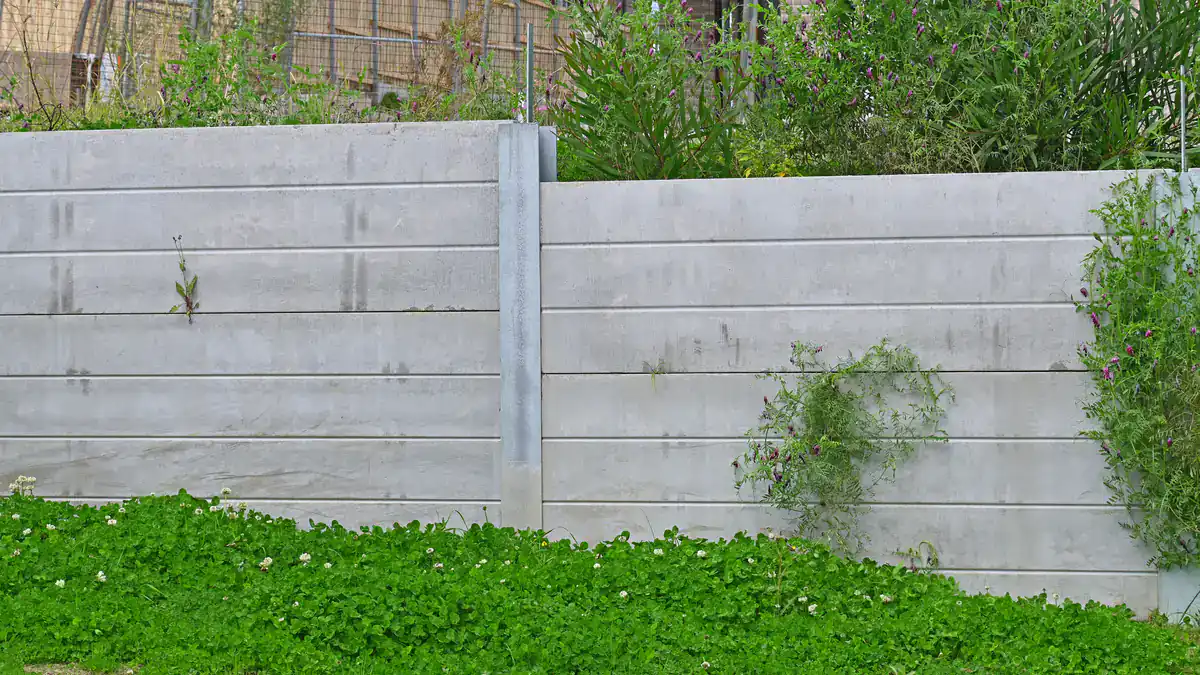
You stop watching topsoil wash into the street every time it rains. Your plants stay rooted where you put them. Water flows away from your foundation instead of pooling against it.
That flat area you’ve been wanting for a patio or garden bed? It’s suddenly possible. The slope that made half your yard unusable becomes terraced, functional space you can actually do something with.
And when you’re ready to sell, buyers see a yard that’s already handled—no erosion problems, no drainage questions, no expensive fixes waiting to happen. Just clean, stable outdoor living spaces in Windsor Park, NC that work the way they should.
Union Landscaping and Hardscape S Corp is a family-owned company based in Monroe, serving homeowners throughout Windsor Park, NC and surrounding areas. We handle the full scope of retaining wall installation—from site evaluation and drainage planning to material selection and final construction.
Windsor Park’s clay soils expand and contract with the seasons, and our humid summers followed by occasional freezes create real challenges for any hardscape structure. We account for that in every project, using proper base preparation, drainage systems, and materials that can handle North Carolina’s weather patterns.
You’re not getting a crew that shows up, stacks some blocks, and leaves. You’re getting people who understand what makes a retaining wall fail—and how to prevent it.
We start with a site visit to look at your slope, drainage patterns, and soil conditions. That tells us what kind of wall you need, how deep the base needs to go, and where water needs to be redirected.
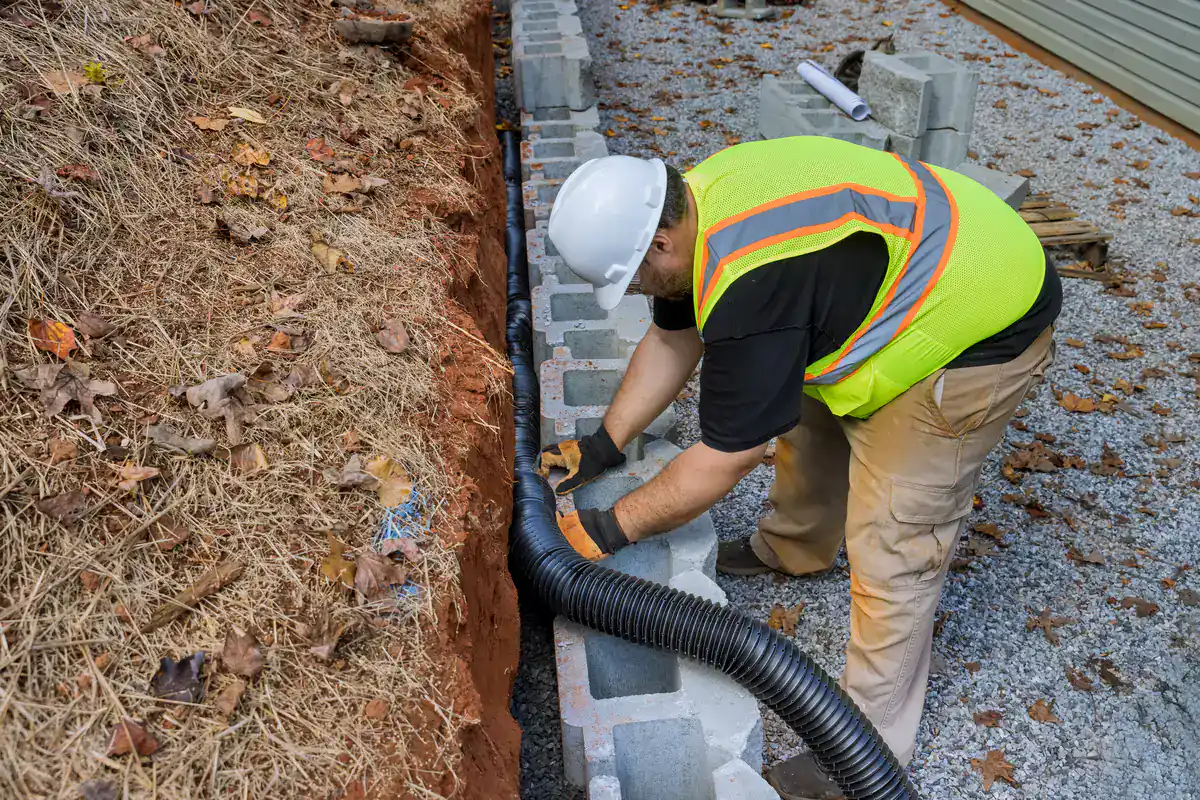
Next comes excavation and base prep. This is where most DIY projects and cheap contractors fail—they skip proper compaction or don’t dig deep enough. We excavate below the frost line, compact the base in layers, and install drainage systems behind the wall so water has somewhere to go besides pushing against your structure.
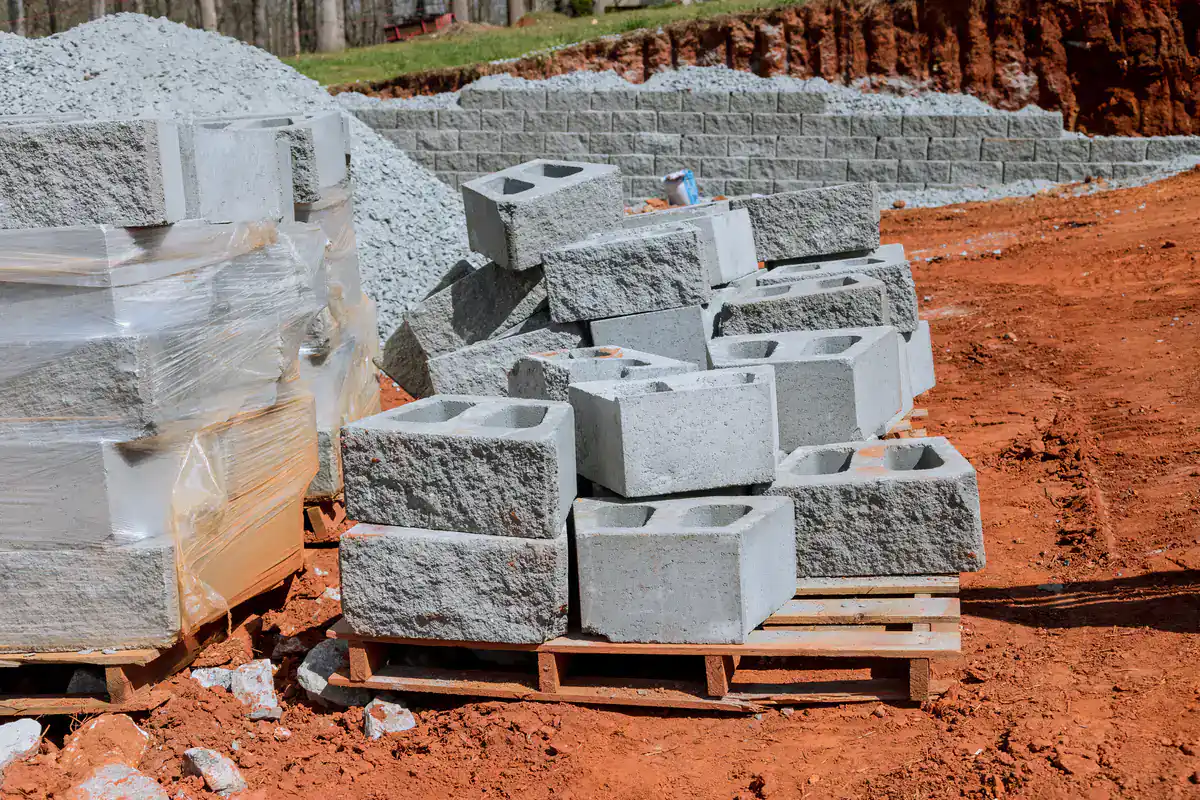
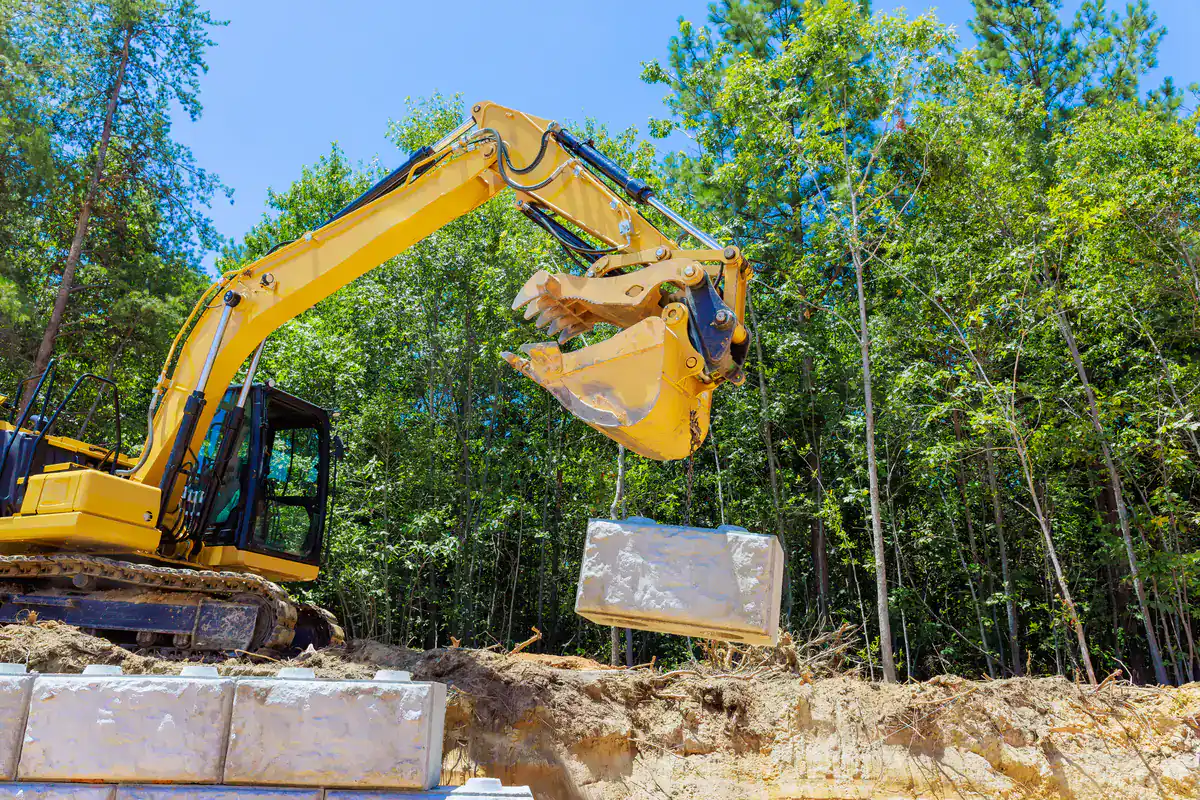
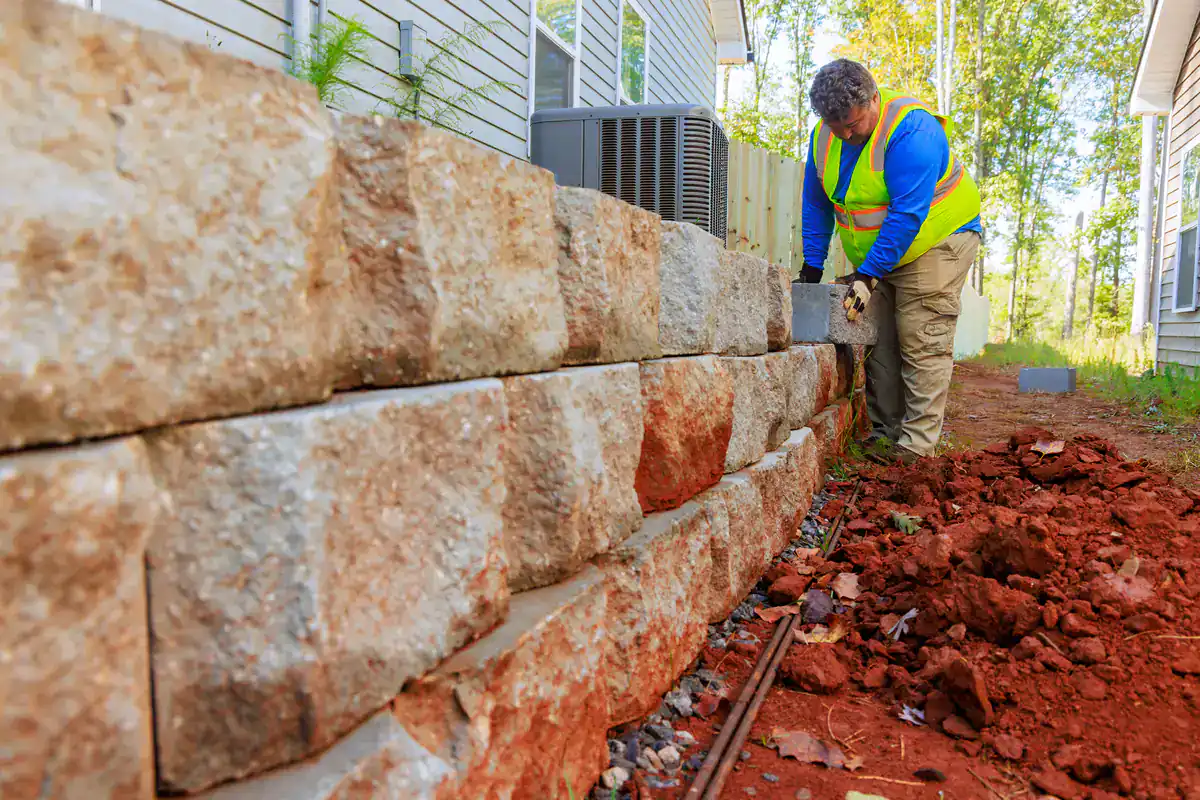
Then we build the wall itself using concrete retaining wall blocks, natural stone, or modular block systems depending on what fits your property and budget. Each course gets leveled, backfilled, and checked before we move to the next. Once the wall is up, we finish with capstones, final grading, and any plantings or mulch that complete the look.
You end up with a retaining wall in Windsor Park, NC that’s engineered to last—not just stacked to look good for a season.
Ready to get started?
Every retaining wall project includes a full site assessment, engineered base preparation, proper drainage installation, and professional construction using materials suited to your landscape. We handle permits when needed—North Carolina requires them for walls over five feet or those adjacent to structures.
In Windsor Park, NC, we’re dealing with expansive clay soils that shift with moisture changes. That means your retaining wall blocks need room to move slightly without cracking, and drainage has to be aggressive enough to handle heavy downpours. We build that into the design from the beginning.
You also get options. Modular retaining wall blocks work well for clean, modern looks and taller structures. Natural stone gives you that timeless, organic feel. Concrete block systems offer durability and cost-effectiveness. We’ll walk you through what makes sense for your property, your budget, and how you actually use your outdoor space.
The goal isn’t just to retain a wall of soil. It’s to give you functional outdoor living spaces that solve real problems—erosion, drainage, limited usable land—and look good doing it.
Most retaining wall installations in the Windsor Park and Monroe area run between $35 and $38 per square foot, but that number moves based on wall height, material choice, site access, and how much drainage work is needed. A basic 20-foot-long, 3-foot-high retaining wall might cost $2,500 to $3,000. A taller natural stone wall with complex drainage and terracing can easily hit $10,000 or more.
Material matters. Concrete retaining wall blocks are cost-effective and durable. Natural stone costs more but delivers a high-end look. Modular systems fall somewhere in between and work well for taller structures that need engineering.
Site conditions affect price too. If we’re working on a steep slope with poor access, or if your soil needs extra stabilization, that adds labor and materials. Same goes for drainage—if water is actively running toward your foundation, we’re installing French drains, weep holes, and backfill systems that cost more upfront but prevent expensive failures later.
Yes, if your wall is over five feet tall or if it’s adjacent to a structure like your house, garage, or driveway. North Carolina Building Code requires those walls to be designed under the responsible charge of a registered design professional. Even if your wall doesn’t hit those thresholds, local ordinances in Windsor Park, NC might have their own requirements.
Permits aren’t just red tape. They ensure your retaining wall installation meets structural standards, has proper drainage, and won’t fail under load or during heavy rain. Inspectors check things like base depth, compaction, and whether your wall can handle the lateral pressure from the soil it’s holding back.
Skipping permits when they’re required can cause problems if you ever sell your home. Buyers’ inspectors will flag unpermitted work, and you could end up tearing down and rebuilding the wall just to close the sale. It’s worth doing it right the first time.
We handle permit applications when needed, so you don’t have to navigate that process yourself.
It depends on what you’re trying to accomplish and how much you want to spend. Concrete retaining wall blocks are the most common choice—they’re strong, affordable, and come in enough styles that you’re not stuck with one look. They handle Windsor Park’s clay soils well as long as drainage is installed correctly.
Natural stone gives you a more organic, high-end appearance, but it costs more and takes longer to install. Stone works beautifully for shorter walls or garden beds where aesthetics matter as much as function. For taller walls or heavy-duty applications, modular block systems are engineered specifically for retaining walls and can handle significant loads.
Wood is an option for smaller projects, but it doesn’t last as long in North Carolina’s humid climate. Pressure-treated timber might give you 10 to 15 years before it starts rotting. Concrete and stone will outlast that by decades.
The real answer comes down to your property. If you’re dealing with a steep slope and need a tall wall, engineered blocks make sense. If you’re terracing a garden bed and want it to look natural, stone might be worth the investment. We’ll walk through what fits your situation during the site visit.
Most residential retaining wall projects in Windsor Park, NC take anywhere from three days to two weeks, depending on size, complexity, and weather. A straightforward 30-foot wall that’s three or four feet tall might be done in a week. A multi-tiered system with extensive drainage work, stairs, or curves can take longer.
Excavation and base prep take up a good chunk of that time, but they’re also the most important part. Rushing through compaction or skipping proper drainage is how walls fail within a few years. We’d rather take an extra day to do it right than have you dealing with a collapsed wall two winters from now.
Weather affects timelines too. If we’re in the middle of construction and a heavy rain hits, we pause until the site drains and the base firms up again. Building on wet, unstable ground leads to settling and structural problems.
You’ll know the timeline upfront. We don’t start a project without giving you a realistic schedule, and we keep you updated if anything changes.
Yes, if it’s designed and built with proper drainage. A retaining wall alone doesn’t stop water—it just holds back soil. But when we install drainage systems behind the wall, we’re giving that water a path to follow that leads away from your foundation instead of pooling against it.
That usually means installing perforated drain pipes at the base of the wall, backfilling with gravel to let water flow freely, and adding weep holes so water can escape through the wall face. In Windsor Park, NC, where clay soils don’t drain well on their own, this step is critical. Without it, water pressure builds up behind the wall, and eventually the wall shifts, cracks, or fails completely.
If you’re dealing with serious drainage issues—water running toward your house during storms, soggy spots that never dry out—we might recommend additional solutions like French drains or regrading the yard to direct water away from the problem area.
The short answer: a well-built retaining wall with proper drainage will absolutely help with water management. But it has to be done right, not just stacked up and hoped for the best.
If you’re seeing soil erosion after every rainstorm, if water runs toward your foundation, or if you’ve got a slope that makes half your yard unusable, you probably need one. Retaining walls solve specific problems—they’re not just decorative features.
Erosion is the big one. If you’re constantly replacing mulch, replanting areas where soil has washed away, or noticing bare spots on slopes, a retaining wall stops that cycle. It holds the soil in place so your plants, grass, and landscaping stay where you put them.
Water management is another reason. If your yard slopes toward your house and you’re dealing with water pooling near the foundation, a retaining wall combined with proper drainage redirects that water before it becomes a basement or crawl space problem.
And then there’s usable space. Sloped yards limit what you can do—no flat area for a patio, no level ground for a garden, no safe spot for kids to play. Retaining walls create terraces that turn unusable slopes into functional outdoor living spaces in Windsor Park, NC.
If any of that sounds familiar, it’s worth having someone look at your property. We’ll tell you whether a retaining wall makes sense or if there’s a simpler solution.
Other Services we provide in Windsor Park