Most homeowners doesn’t know what is hardscaping and what a patio is. Fewer know that the patio, the walkway leading to it, and the low wall around the fire pit all fall under one term: hardscaping. Knowing what the word covers makes it much easier to plan a yard, talk with contractors, and understand why some projects cost more than others.
At Union Landscaping & Hardscape, a family-owned company based in Monroe, NC, hardscaping is a core part of the work we do. This guide explains what hardscaping is, how it differs from the living parts of a landscape, the most common types and examples, and what generally affects the cost. It also covers a few things homeowners around Charlotte and Union County should keep in mind before adding stone, pavers, or walls to their yard.
Quick Answer
Hardscaping is the non-living, built part of a landscape. It includes patios, walkways, walls, steps, fire pits, pool decks, edging, and gravel areas, usually made from stone, concrete, pavers, brick, or similar materials. Softscaping covers the living parts: lawn, trees, shrubs, and flower beds. Most well-designed yards balance the two. Hardscaping generally costs more per square foot than planting because it involves heavier materials, equipment, and careful base preparation.
Table of Contents
- What Is Hardscaping?
- Common Types of Hardscaping
- Hardscaping Examples for Different Yards
- Hardscape vs. Softscape
- Hardscaping Costs Explained
- Important Factors to Consider
- Hardscaping in Charlotte & Union County
- Common Hardscaping Mistakes
- What to Expect When Working With a Hardscape Contractor
- Frequently Asked Questions
What Is Hardscaping?
Hardscaping refers to any permanent, man-made feature in a landscape that isn’t alive. If you can walk on it, sit on it, or build around it, and it doesn’t grow, it’s likely hardscape.
When people search for “what is hardscape landscaping,” they’re usually trying to understand where hardscape fits in the bigger picture. The simplest way to think about it is structure. Hardscape gives a yard its shape and function: places to gather, paths to move through, and walls to hold back soil or define space. Softscape brings in color, texture, shade, and seasonal change.
Hardscaping also does practical work most homeowners don’t notice until it’s missing. A walkway keeps foot traffic off the lawn. A retaining wall stops a slope from washing out. A properly pitched patio moves rainwater away from the house. Good hardscape looks finished, but it also solves problems.
Common Types of Hardscaping
Patios
Patios are the most common hardscape feature. They create a defined outdoor living area for dining, relaxing, or entertaining. Concrete pavers, natural stone, brick, and poured concrete are the most common materials. Learn more about paver patio installation.
Walkways and Paths
Walkways connect one part of the property to another: the driveway to the front door, the back door to the patio, or the patio to a garden. They can be formal paver runs, natural stone stepping paths, or simple gravel. See paver walkway installation.
Walls
Walls come in two main types. Seat walls are short, freestanding walls that add built-in seating and frame a patio. Retaining walls hold back soil on sloped ground and are built with drainage and, in some cases, reinforcement behind them. Explore seat wall installation.
Fire Pits and Outdoor Living Features
A fire pit is often the centerpiece of a backyard patio. It gives people a reason to use the space in the evening and into the cooler months. Learn more about fire pit installation.
Pool Decks and Coping
The surfaces around a pool are hardscape too. Pool coping caps the edge of the pool, and the deck surrounds it. Both need to be slip-resistant and stand up to water and sun. See pool coping installation.
Edging, Borders, and Gravel
Smaller hardscape elements matter as well. Stone or paver edging gives beds a clean line, and gravel areas can handle side yards, paths, or spots where grass struggles to grow.
Hardscaping Examples for Different Yards
A Backyard Built for Entertaining
A paver patio sized for a table and chairs, a fire pit with a seat wall on one side, and a walkway connecting it to the back door. This is one of the most requested combinations because it turns an unused backyard into a second living room.
A Sloped Lot
On a sloped yard, retaining walls can create flat, usable terraces, and steps can connect the levels. This type of project often includes drainage work, because slopes move water as well as soil.
Front Yard Curb Appeal
A defined walkway to the front door, stone edging along the beds, and a small landing at the steps. These changes are modest in scale but make a big difference in how a home looks from the street.
A Low-Maintenance Side Yard
Gravel or stepping stones in a narrow side yard where grass won’t grow, combined with a few hardy plants. Simple, practical, and easy to keep up.
Hardscape vs. Softscape
| Hardscape | Softscape | |
|---|---|---|
| What it is | Built, non-living features | Living plants and lawn |
| Examples | Patios, walkways, walls, fire pits | Lawn, trees, shrubs, flower beds, mulch |
| Main purpose | Structure, function, outdoor living | Color, shade, texture, softness |
| Changes over time | Stays largely the same | Grows, matures, changes with seasons |
| Upkeep | Occasional cleaning and joint sand | Watering, pruning, mowing, mulching |
| Relative cost | Higher per square foot | Lower per square foot |
The best yards rarely lean entirely one way. Too much hardscape can feel hot and harsh. Too little can leave a yard without usable space. A good design uses hardscape to create structure and softscape to soften it.
Hardscaping Costs Explained
Hardscape cost depends on what you build and the conditions you build it on. The biggest factors are the size of the project, the surface material, the base underneath it, the slope of the yard, and how easy the area is to reach.
In general, poured concrete sits at the lower end, concrete pavers in the middle, and natural stone at the higher end. Features that involve structure, like retaining walls, tend to cost more than surface features like walkways. Much of what you pay for never shows once the project is finished: excavation, crushed stone base, compaction, and drainage. That hidden work is what keeps a patio level for years instead of seasons.
Because every site is different, the most reliable way to price a hardscape project is an on-site estimate from a hardscape contractor who can see the slope, soil, and access firsthand.
Important Factors to Consider
Material and Style
Choose materials that suit the style of the house and how the space will be used. A pool deck needs slip resistance. A dining patio needs a flat, even surface. A garden path can be more informal.
Drainage
Every hardscape surface changes how water moves across a yard. Patios should pitch away from the house, and retaining walls need drainage behind them. If water is already a problem, yard drainage solutions may need to be part of the plan.
Scale and Balance
A patio that’s too small feels cramped. One that’s too large can overwhelm the yard. Plan the size around how many people will use the space and what furniture needs to fit.
Long-Term Upkeep
Hardscape needs less upkeep than planting, but it isn’t maintenance-free. Pavers benefit from occasional cleaning and refreshed joint sand, and stone may need sealing depending on the material.
Hardscaping in Charlotte & Union County
Local soil and weather shape how hardscape should be built. Around Monroe and across the Piedmont, red clay is the main concern. It holds water, drains slowly, and shifts with wet and dry cycles. A deeper, well-compacted base and a clear plan for drainage help patios and walkways stay level.
Winter freezes and summer storms add to the picture. Water trapped under a patio can freeze and push pavers out of place, and heavy rain tests how well surfaces shed water. Many properties in Waxhaw, Weddington, and other parts of Union County also sit in HOA communities, where patios and walls typically need approval before work begins.
Common Hardscaping Mistakes
Skimping on the Base
The base is the foundation of every patio and walkway. A thin or poorly compacted base is the most common reason hardscape sinks or shifts over time.
Forgetting About Water
Hardscape that ignores drainage can send water toward the house, create puddles, or push against a retaining wall until it fails.
Choosing Materials for Looks Alone
A material that looks great in a photo may be slippery when wet, too hot near a pool, or a poor match for the house. Think about how the space will be used, not just how it will look.
What to Expect When Working With a Hardscape Contractor
A hardscape project usually starts with a site visit to look at the slope, soil, drainage, and access, and to talk through how you want to use the space. From there, the contractor develops a layout and a written estimate covering materials, base work, and labor.
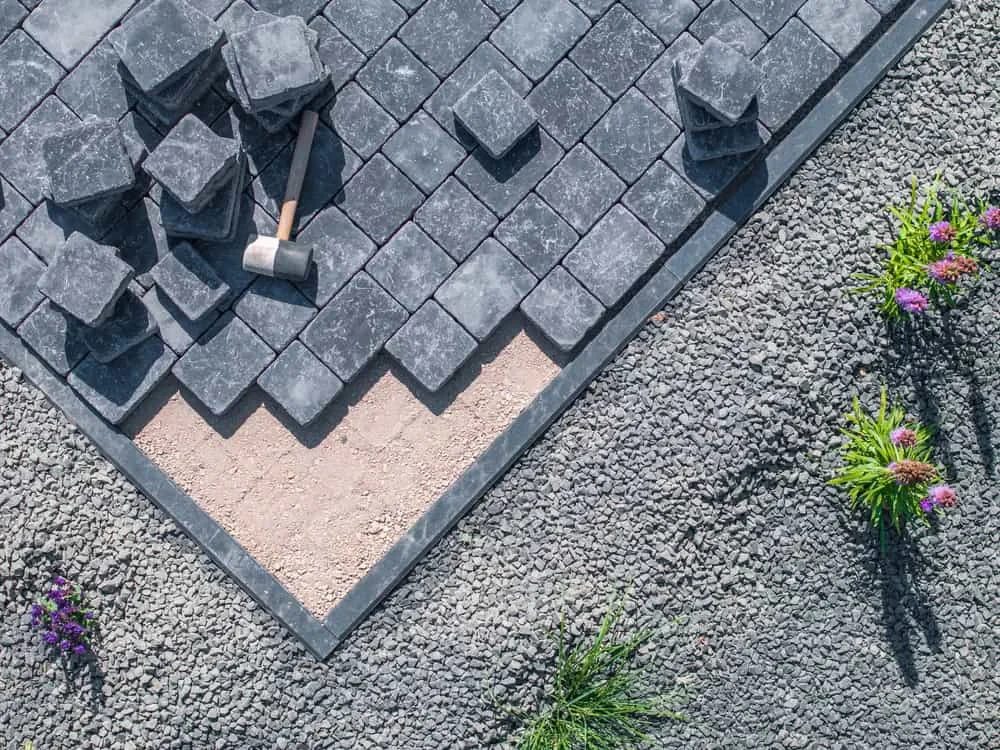
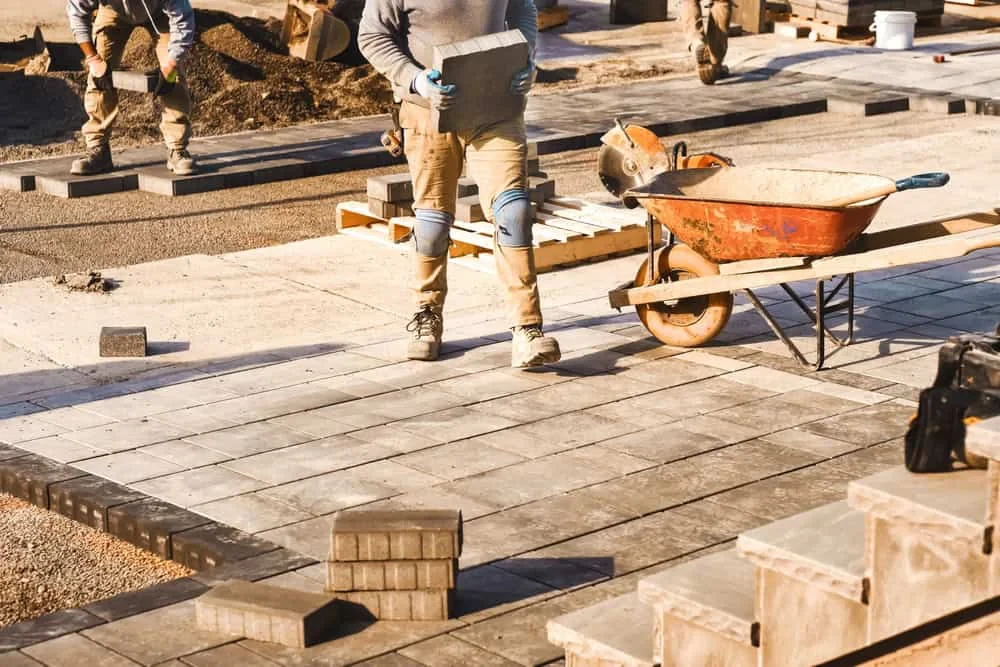
Once approved, installation follows a set order: marking the layout, excavation, base installation and compaction, setting the surface material, cutting edges, installing edge restraints, and finishing the joints. A final walkthrough is the time to ask about care and maintenance.
Frequently Asked Questions
What is the difference between hardscaping and landscaping?
Landscaping is the broader term for improving outdoor space. Hardscaping is one part of it and covers built features like patios, walkways, and walls. The other part, softscaping, covers lawn and plants.
Is a deck considered hardscaping?
Decks are often grouped with hardscape because they’re built, non-living structures. However, most hardscape refers to features made from stone, concrete, pavers, or brick at ground level.
What is the most popular type of hardscaping?
Patios are the most common, followed by walkways, fire pits, and walls. Many projects combine several of these into one outdoor living area.
Does hardscaping add value to a home?
Well-built hardscape adds usable outdoor living space and curb appeal, which many homeowners and buyers value. How much it affects resale depends on the home, the neighborhood, and the quality of the work.
Can hardscaping be added in phases?
Yes. Many homeowners start with a patio and add a fire pit, walls, or walkways later. Planning the full layout first makes each new phase fit with the last.
Ready to Add Structure to Your Yard?
Hardscaping can turn an underused yard into a space you actually spend time in. If you’re thinking about a patio, walkway, wall, or fire pit in Monroe, Union County, or the Charlotte area, contact Union Landscaping & Hardscape to talk through your ideas and request an estimate.
Expert Reviewer: Angel Riquelme, Owner, Union Landscaping & Hardscape [confirm before publishing]
Angel leads Union Landscaping & Hardscape, a family-owned landscaping and hardscaping company based in Monroe, NC.