Summary:
Choosing the right hardscape material for your Mecklenburg County outdoor space shouldn’t feel like guesswork. This guide walks you through the real differences between concrete, brick, stone, and permeable pavers.
You’ll learn what each material costs, how it performs in North Carolina’s climate, and which option makes sense for your lifestyle and budget. No fluff, just the information you need to move forward.
Table of contents
Understanding Hardscape Material Options
Hardscape materials are the foundation of any outdoor project. They determine how your patio looks, how long it lasts, and how much maintenance you’ll be doing five years from now.
The four main options are concrete pavers, brick pavers, natural stone, and permeable pavers. Each has a specific use case. Concrete pavers offer design flexibility and affordability. Brick brings timeless style and color that won’t fade. Natural stone delivers high-end aesthetics with unique character. Permeable pavers manage water while looking good.
Your choice isn’t just about appearance. It’s about matching material performance to North Carolina’s hot summers, occasional freezes, and heavy rainfall. It’s about knowing which option saves you money upfront versus long-term. And it’s about understanding what “low maintenance” actually means for each material.
Concrete Pavers: Design Flexibility Without Breaking the Bank
Concrete pavers are the most popular hardscape material for good reason. They’re made from cement and aggregate, compressed into molds and air-dried. This manufacturing process allows for virtually unlimited shapes, sizes, colors, and textures.
Cost-wise, you’re looking at $8 to $15 per square foot installed. That’s the most budget-friendly option without sacrificing quality. A 300-square-foot patio runs $2,400 to $4,500, which fits most homeowners’ budgets while still delivering a professional look.
The design flexibility is where concrete pavers shine. Want a modern geometric pattern? Done. Prefer something that mimics natural stone? Available. Need a specific color to match your home’s exterior? You’ll find it. Manufacturers can produce concrete pavers in nearly any aesthetic you’re after.
Durability in Mecklenburg County’s climate is solid. Concrete pavers handle the heat well and resist most weather conditions. They’re strong enough for driveways and high-traffic areas. Individual pavers can be replaced if one cracks, which beats tearing out an entire concrete slab.
The maintenance reality: concrete pavers need sealing every two to five years to maintain color and prevent staining. Without sealing, UV exposure will fade the color over time since the pigment is mixed into the surface rather than throughout the entire paver. Plan on occasional joint sand replenishment and regular cleaning.
Installation is straightforward compared to other paver patio materials. Concrete pavers are manufactured to precise dimensions, which means they fit together cleanly and installation moves faster. That translates to lower labor costs.
The downside? Color fading is real. Even with sealing, concrete pavers won’t retain their original vibrancy as long as brick. And while they’re durable, they’re not quite as long-lasting as natural materials. You’re looking at 20 to 30 years of solid performance with proper care.
Brick Pavers: Color That Lasts Generations
Brick pavers are made from natural clay that’s molded into shape and fired in a kiln at extremely high temperatures. This process creates a dense, durable material with color that runs all the way through, not just on the surface.
The cost is higher: $10 to $20 per square foot installed. That same 300-square-foot patio now costs $3,000 to $6,000. The price reflects both the manufacturing process and the material’s longevity. You’re paying more upfront for a product that can literally last generations.
Color retention is brick’s superpower. Because the color comes from the natural clay and minerals, not added pigments, it won’t fade even after decades of sun exposure. A brick patio looks nearly the same after 30 years as it did on day one. That’s a significant advantage in North Carolina’s intense summer sun.
The aesthetic is classic and warm. Brick delivers that timeless look that works with traditional homes, historic properties, and even modern designs when laid in contemporary patterns. You’re limited to earth tones—reds, browns, burgundy, tan—but those colors complement most architectural styles.
Durability is exceptional. Brick pavers can handle heavy loads, adjust when the ground shifts, and withstand freeze-thaw cycles better than many alternatives. Colonial-era brick walkways are still in use today. That’s not marketing hype; it’s proven performance.
Maintenance is minimal. Brick doesn’t require sealing, though you can seal it for extra protection in high-grease areas like around grills. Regular sweeping and occasional rinsing with a hose is typically all you need. Weeds between joints can be managed with standard weed control products.
The installation is more labor-intensive. Because brick pavers are fired in a kiln, slight size variations occur. This means installers need more skill and time to create level, uniform surfaces. That’s why labor costs run higher for brick projects.
Limitations include less design flexibility. Brick pavers typically come in rectangular shapes around 4″ x 8″, which limits pattern options to running bond, herringbone, and basket weave. And while the earth-tone palette is beautiful, it won’t work if you’re after bright colors or modern grays.
In Mecklenburg County’s climate, brick performs exceptionally well. The material handles humidity without issue, doesn’t absorb excessive moisture, and manages temperature fluctuations. It’s one of the most climate-appropriate choices for this region.
Want live answers?
Connect with a Union Landscaping and Hardscape expert for fast, friendly support.
Natural Stone and Permeable Paver Options
Beyond concrete and brick, two other material categories deserve serious consideration: natural stone and permeable pavers. Both serve specific needs that might match your project perfectly.
Natural stone includes flagstone, slate, granite, limestone, and bluestone. These are quarried directly from the earth, cut to size, and installed. Each piece is genuinely unique with natural color variations and textures you can’t replicate with manufactured materials.
Permeable pavers are designed specifically to let water pass through the surface into the ground below. They address drainage issues and stormwater management while still providing a solid, attractive surface. In Mecklenburg County, where heavy rainfall is common, this functionality matters.
Both options fill gaps that concrete and brick can’t. Natural stone delivers luxury and organic beauty. Permeable pavers solve practical water problems. Understanding when each makes sense helps you choose the best hardscape materials for your specific situation.
Natural Stone: Unique Character You Can't Manufacture
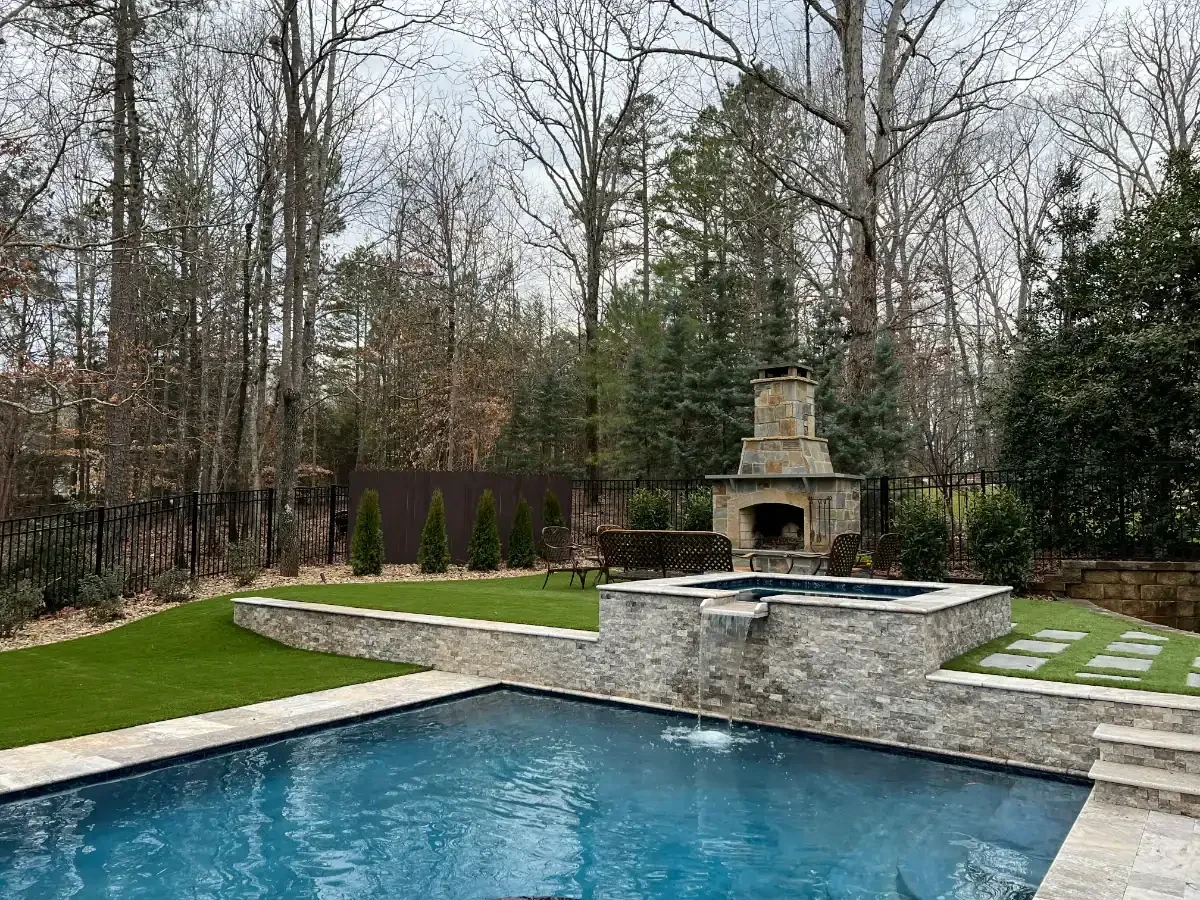
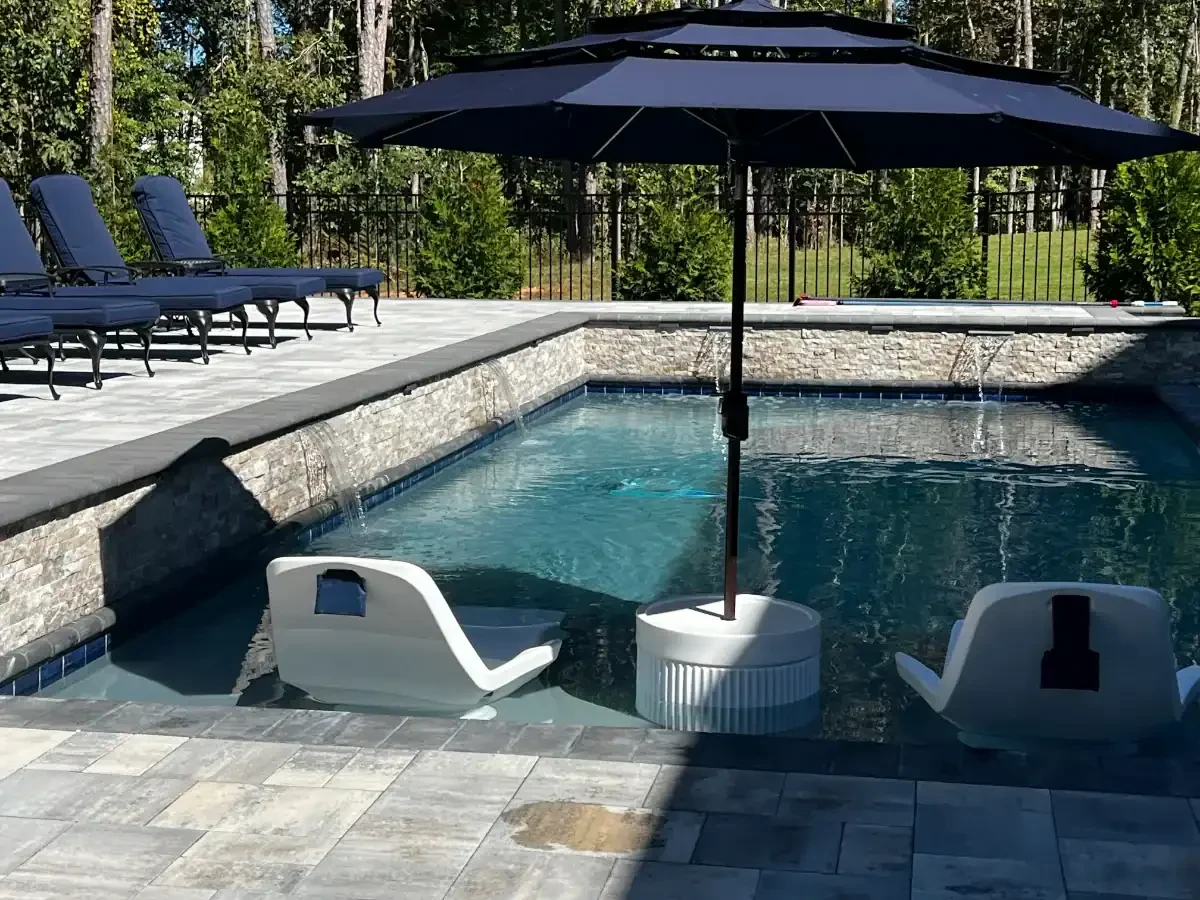
Natural stone is the premium hardscape material. Cost reflects that: $15 to $50 per square foot installed, depending on the stone type and sourcing. A 300-square-foot patio could run $4,500 to $15,000. That’s a significant investment, but the result is unlike anything manufactured materials can achieve.
The aesthetic appeal is unmatched. Each stone piece has unique color variations, textures, and patterns formed over thousands of years. Flagstone offers irregular, organic shapes. Granite provides strength and polish. Bluestone delivers cool, sophisticated tones. Limestone brings warmth and earthiness.
Locally sourced stone from North Carolina quarries can reduce costs and create a hardscape that reflects the region’s natural geology. Your outdoor space literally becomes an extension of the local landscape.
Installation requires skilled professionals. Natural stone isn’t pre-cut to uniform dimensions. Each piece needs to be shaped, fitted, and placed individually. This custom work takes time and expertise, which drives up labor costs. But the craftsmanship shows in the finished product.
Durability varies by stone type. Granite is incredibly hard and resistant to wear. Slate handles moisture well. Flagstone can be more prone to flaking in freeze-thaw conditions. Choosing the right stone for Mecklenburg County’s climate is crucial.
Maintenance is generally low. Natural stone doesn’t require sealing in most cases, though some homeowners choose to seal for easier cleaning and stain resistance. Regular sweeping and occasional rinsing keep stone looking good. Moss can grow in shaded, damp areas but is easily managed.
The weight and thickness of natural stone mean it needs proper base preparation. Inadequate base work leads to settling and unevenness. This is another reason professional installation matters for stone projects.
Design flexibility is high but different from concrete pavers. You’re not working with uniform shapes and patterns. Instead, you’re creating organic layouts that feel natural and custom. This works beautifully for meandering walkways, rustic patios, and high-end pool decks.
Permeable Pavers: Solving Drainage While Looking Good
Permeable pavers are engineered to let water pass through the surface instead of running off. They’re made from concrete or other materials with intentional gaps between units filled with gravel or aggregate. Water flows through these gaps into layers of stone beneath, then into the soil.
In Mecklenburg County, this functionality addresses real problems. Heavy rainstorms create runoff that causes erosion, floods low spots, and overwhelms drainage systems. Permeable pavers reduce runoff by up to 90%, managing water right where it falls.
The environmental benefits are substantial. Water that passes through permeable pavers gets naturally filtered, removing pollutants like oil, grease, and sediment before reaching groundwater or streams. This improves water quality in local waterways and supports healthier ecosystems.
North Carolina has stormwater regulations that favor permeable solutions. In coastal areas, restrictions on impervious surfaces make permeable pavers a practical choice. Using permeable pavers can help meet these regulations and avoid costly permitting issues.
Cost is comparable to quality concrete pavers, typically $8 to $15 per square foot installed. You’re not paying a premium for the environmental benefits. The investment makes sense both practically and financially.
Durability is excellent. Permeable pavers handle vehicle loads without issue and are suitable for driveways, patios, and walkways. The materials withstand Mecklenburg County’s climate, including freeze-thaw cycles. The flexible nature of individual pavers means they adjust to ground movement without cracking like solid concrete.
Maintenance involves periodic cleaning to prevent the gaps from clogging with sediment. Vacuuming or power washing every one to three years keeps water flowing through properly. It’s more maintenance than solid pavers but manageable for most homeowners.
The aesthetic has improved significantly. Early permeable pavers looked utilitarian. Modern options come in various colors, textures, and styles that match traditional hardscape materials. You don’t sacrifice appearance for functionality anymore.
Installation requires expertise in base preparation. The layers beneath permeable pavers—aggregate, stone, and drainage systems—must be installed correctly for the system to work. This isn’t a DIY project. Professional installation ensures proper water infiltration and long-term performance.
In areas with poor drainage, standing water, or erosion problems, permeable pavers solve issues that other materials can’t address. They turn a functional problem into an attractive solution.
Choosing the Best Hardscape Material for Your Project
The best hardscape materials aren’t determined by trends or what looks impressive online. They’re determined by how you’ll use the space, what Mecklenburg County’s climate demands, and what makes sense for your budget and maintenance capacity.
Concrete pavers deliver affordability and design flexibility. Brick offers timeless beauty and exceptional longevity. Natural stone provides high-end character and organic aesthetics. Permeable pavers solve drainage problems while looking good.
Your decision comes down to priorities. If budget matters most and you want design options, concrete pavers make sense. If you want something that lasts generations with minimal upkeep, brick is the answer. If you’re after luxury and uniqueness, natural stone delivers. If you’re dealing with water issues or want an eco-friendly option, permeable pavers are the solution.
We work with homeowners throughout Monroe and Mecklenburg County to choose materials that actually fit their needs. The conversation starts with understanding your space, your goals, and the real-world factors that impact performance. From there, the right material becomes clear.