Summary:
Your outdoor space shouldn’t disappear when the sun goes down. This guide explores practical landscape lighting ideas that enhance safety, extend your evening hours outdoors, and showcase your home’s best features after dark.
Whether you’re concerned about dark walkways, want to enjoy your patio past sunset, or simply want your landscaping investment visible at night, you’ll learn how strategic lighting creates both beauty and function. We’ll cover design techniques, common mistakes to avoid, and how LED technology makes outdoor lighting more efficient than ever.
Table of contents
How Landscape Lighting Improves Safety and Security
The most practical reason to add outdoor lighting has nothing to do with looks. It’s about keeping people safe.
Dark pathways, unlit steps, and shadowy corners create real hazards. Trip-and-fall accidents happen when you can’t see where you’re going. And from a security standpoint, homes without proper outdoor lighting are up to three times more likely to be targeted by intruders simply because darkness provides cover.
Good lighting eliminates both problems. It shows you exactly where to step, highlights elevation changes, and removes the hiding spots that make your property vulnerable. The right fixtures in the right places give you visibility without turning your yard into a floodlit stadium.
Pathway Lighting Prevents Accidents and Guides Guests Safely
If you have walkways, driveways, or garden paths, pathway lighting should be your first priority. These fixtures do exactly what the name suggests—they light the way so you can see where you’re walking.
The key is placement. Path lights work best when spaced about six to eight feet apart, creating pools of light that overlap slightly. You don’t need them lined up like runway markers. In fact, that’s one of the most common mistakes homeowners make. Instead, stagger them in a zigzag pattern on either side of the path, or follow the natural curves if your walkway isn’t straight.
Low-voltage LED path lights offer the best combination of safety and efficiency. They produce enough light to see clearly without creating harsh glare, and they last significantly longer than traditional bulbs. Most quality LED fixtures run for 25,000 to 60,000 hours, which translates to years of reliable performance with minimal maintenance.
Think about the paths you and your family use most often. The walkway from your driveway to the front door. The route from your patio to the fire pit. Any steps or elevation changes in your yard. These are the areas where proper lighting makes the biggest difference in preventing accidents and making your outdoor spaces genuinely usable after dark.
When you’re choosing fixtures, consider the style of your home and existing landscape features. Path lights come in various designs, from traditional lantern styles to sleek modern profiles. The goal is to complement what’s already there while providing functional illumination that serves a real purpose.
Step and Stair Lighting Reduces Fall Hazards
Steps are one of the most dangerous areas on any property after dark. You can’t see the edge. You misjudge the height. One wrong move and someone gets hurt.
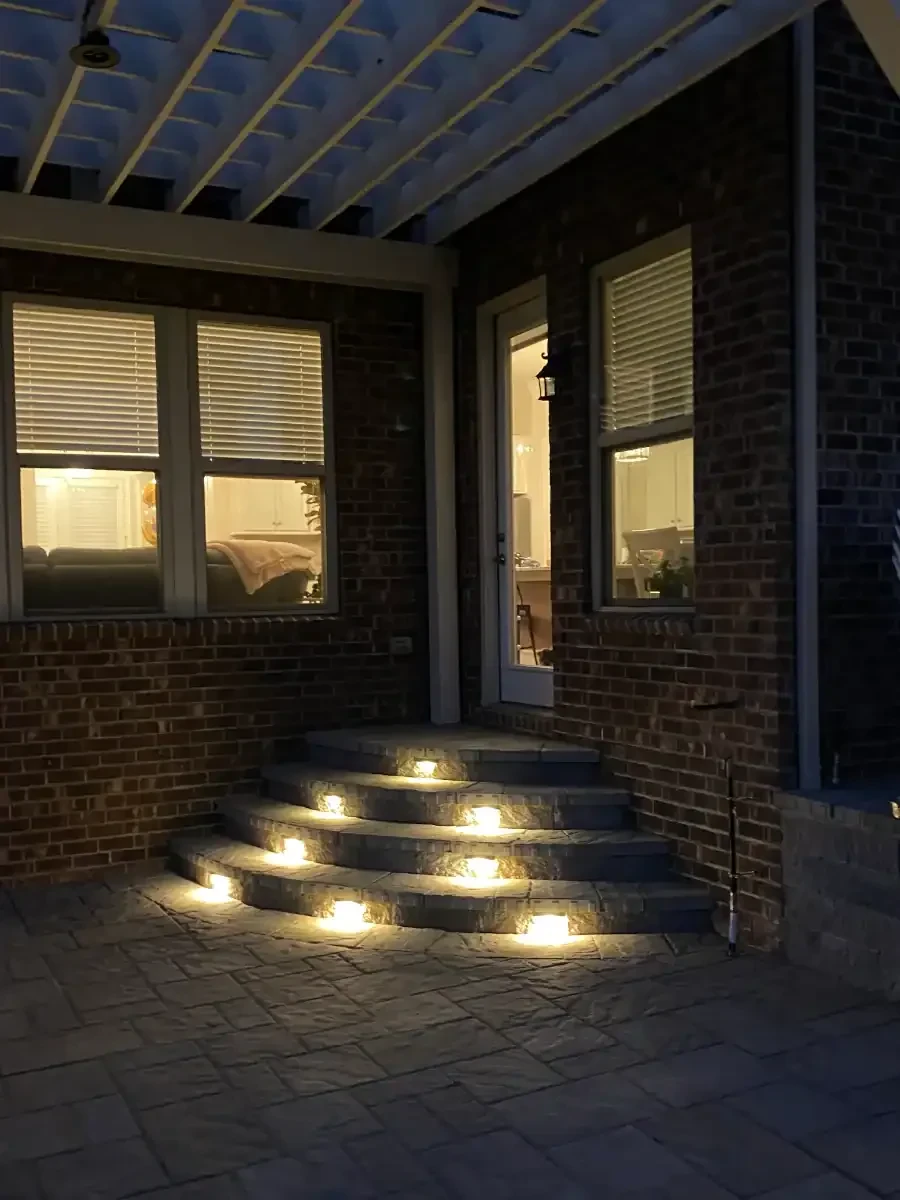
Step lighting solves this by installing low-profile fixtures directly into the vertical risers or along the walls beside your stairs. These lights cast a gentle downward glow that illuminates each tread without creating distracting glare. You see exactly where to place your foot, which makes navigation safe and intuitive.
This type of lighting is especially important if you have multi-level outdoor living areas—deck stairs, patio steps, or terraced landscaping. Even a short flight of three or four steps benefits from proper illumination. The fixtures are designed to be subtle during the day and functional at night, so they don’t interfere with your outdoor aesthetic.
The installation process typically involves recessing the fixtures into the riser itself or mounting them on adjacent walls. Professional installation ensures they’re positioned correctly and wired safely, with waterproof connections that can handle rain, humidity, and temperature changes throughout the year.
Beyond safety, step lighting adds a layer of sophistication to your outdoor design. It creates visual interest and draws attention to architectural details that might otherwise go unnoticed. When guests arrive for an evening gathering, well-lit stairs signal that your outdoor space is thoughtfully designed and welcoming.
If you have a deck, patio, or any outdoor structure with stairs, step lighting should be part of your plan. It’s one of those improvements that pays dividends every single time someone uses those steps after sunset. You’ll wonder how you ever managed without it.
Want live answers?
Connect with a Union Landscaping and Hardscape expert for fast, friendly support.
Landscape Lighting Ideas That Enhance Curb Appeal
Safety matters, but let’s be honest—you also want your home to look good. The right landscape lighting showcases your property’s best features and creates an inviting atmosphere that makes people stop and take notice.
Studies show that professionally installed outdoor lighting can increase your property value by 20 percent or more. That’s not just because it looks nice. It’s because lighting signals that a home is well-maintained, thoughtfully designed, and cared for. It makes your landscaping investment visible around the clock instead of disappearing the moment the sun goes down.
Curb appeal isn’t about showing off. It’s about creating a space that feels welcoming and reflects the effort you’ve put into your property. Strategic lighting helps you achieve that without overdoing it.
Uplighting Highlights Trees and Architectural Features
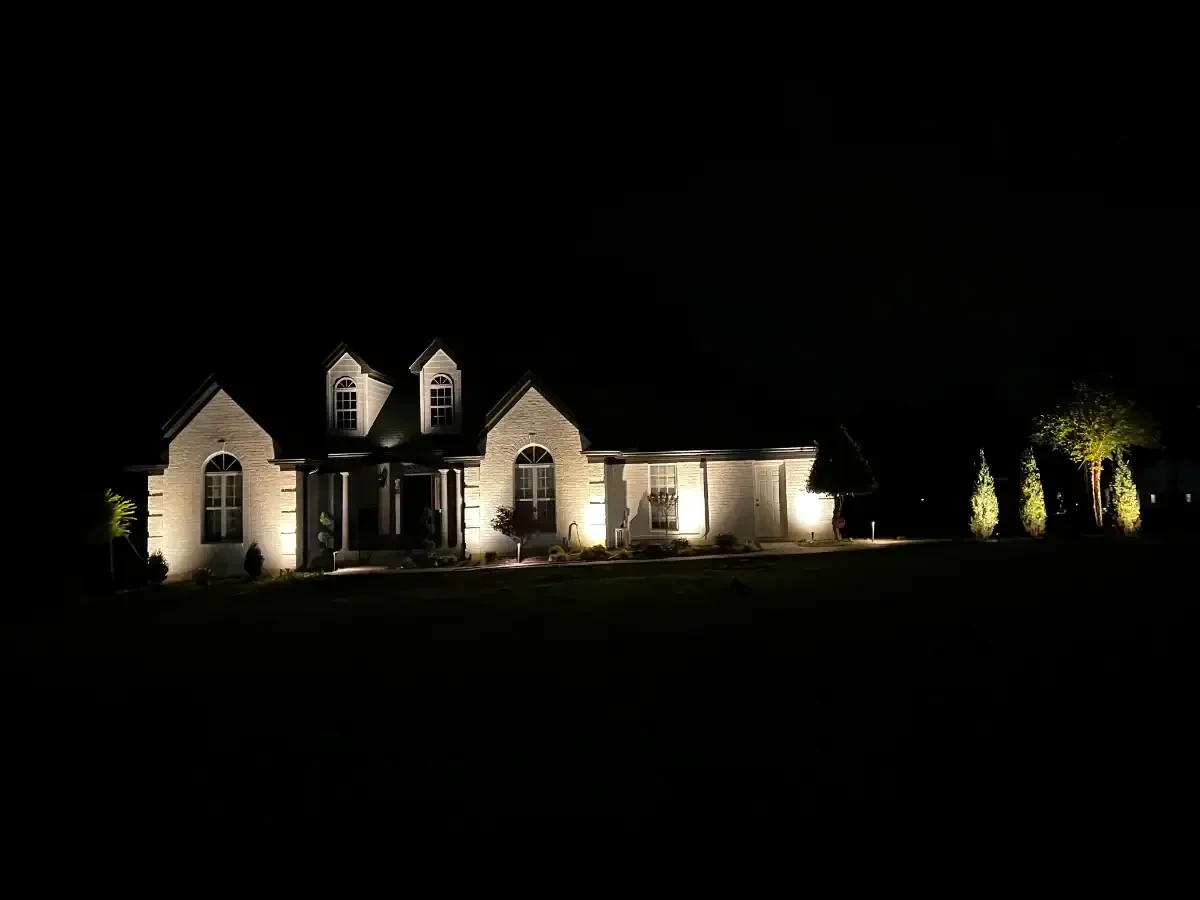
Uplighting is one of the most dramatic and effective landscape lighting techniques. It involves placing fixtures at ground level and aiming them upward to illuminate trees, stone walls, columns, or other vertical features.
The effect is striking. A mature tree that blends into the background during the day becomes a focal point at night. The textured bark catches the light, branches cast interesting shadows, and the entire tree takes on a presence that draws the eye. The same principle applies to architectural elements—stone facades, brick chimneys, decorative columns—anything with texture or visual interest benefits from uplighting.
The key is restraint. You don’t need to light every tree in your yard. Choose one or two that have interesting shapes or serve as natural focal points. Position the fixtures close to the base and angle them upward to create depth and contrast. LED uplights work particularly well for this because they’re energy-efficient and produce minimal heat, which means they won’t damage plants or landscaping materials even when positioned close.
In Mecklenburg County, where many homes feature mature trees and custom hardscaping, uplighting is an excellent way to showcase those investments. It creates layers of light that add dimension to your property and make your outdoor space feel larger and more intentional.
When done correctly, uplighting doesn’t feel artificial or overdone. It mimics the way natural moonlight might filter through branches, creating a soft, inviting glow that enhances rather than overwhelms. This technique works year-round and adapts beautifully to seasonal changes as foliage shifts and grows.
If you’ve invested in quality landscaping or hardscaping, uplighting ensures that investment remains visible and appreciated long after the sun sets. It’s one of the most impactful ways to transform your property’s nighttime appearance.
Accent Lighting and Downlighting Create Ambiance
Not all landscape lighting needs to be dramatic. Sometimes the goal is simply to create a comfortable, inviting atmosphere that makes your outdoor space feel like an extension of your home.
Accent lighting targets specific features you want to highlight—a water feature, a sculpture, a beautifully planted garden bed. These fixtures use focused beams to draw attention without flooding the entire area with light. The result is subtle and sophisticated, adding visual interest without overwhelming the scene.
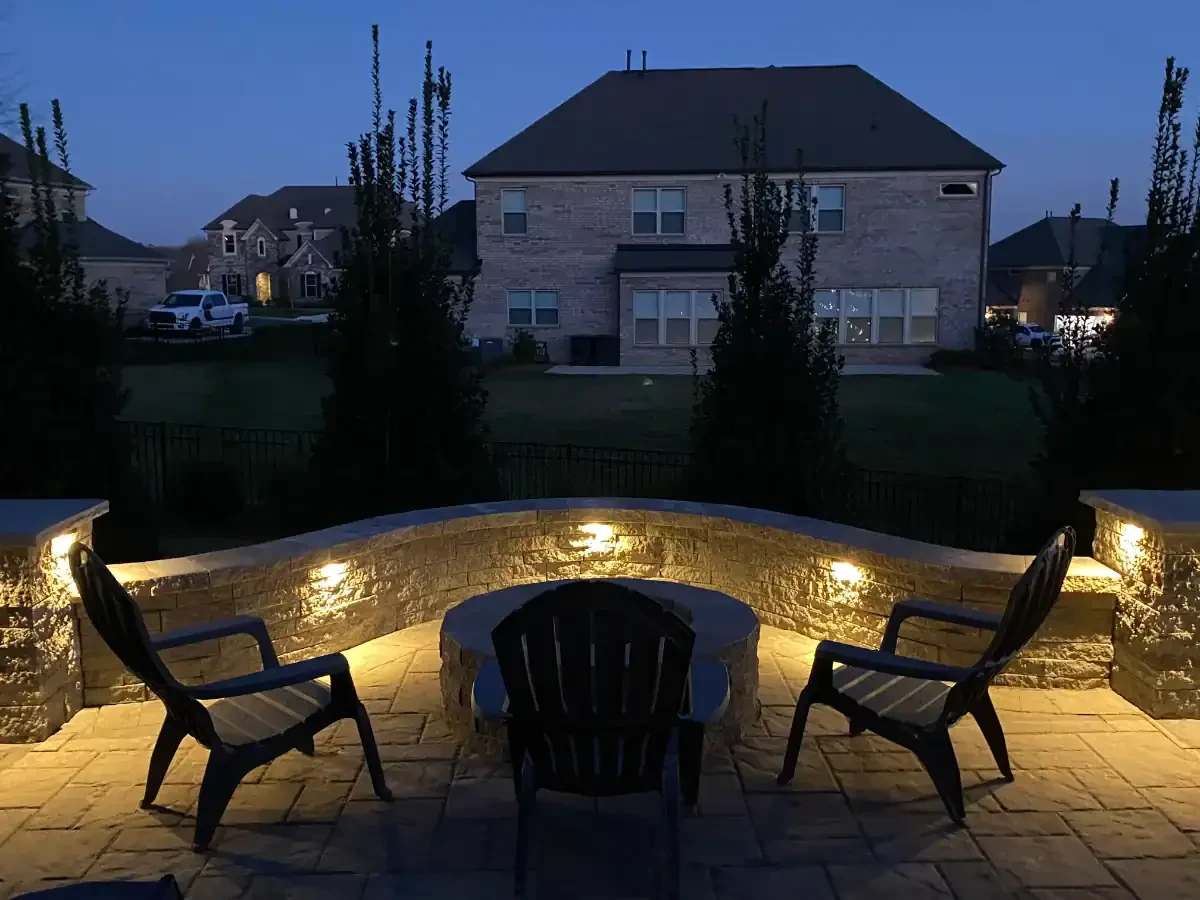
Downlighting, often called moonlighting, takes a different approach. Fixtures are mounted high—usually in trees or on structures—and aimed downward to cast gentle pools of light on the ground below. This technique mimics natural moonlight and creates a soft, even illumination that’s perfect for patios, seating areas, and outdoor dining spaces.
The beauty of downlighting is that it feels natural. There’s no harsh glare, no obvious light source, just a comfortable glow that makes the space usable and inviting. It works especially well for outdoor living areas where you want enough light to see clearly but not so much that it feels like you’re sitting under a spotlight.
Combining accent lighting with downlighting creates layers of illumination that add depth and dimension to your outdoor space. You might use downlighting to illuminate a patio for dining and conversation, then add accent lights to highlight a nearby fire pit or water feature. The layered approach ensures that every area serves its purpose while maintaining a cohesive, well-designed feel.
When planning your lighting design, think about how you actually use your outdoor spaces. Do you entertain frequently? Do you want a quiet spot to unwind after work? The answers will guide your choices and help you create lighting that enhances your lifestyle rather than just checking a box.
LED technology makes all of this more accessible and affordable than ever. Modern fixtures offer adjustable brightness, long lifespans, and energy efficiency that traditional lighting simply can’t match. You get better performance, lower energy bills, and less maintenance—all while creating an outdoor environment that looks and feels exactly the way you want it to.
Creating Outdoor Spaces You Can Enjoy After Dark
Landscape lighting isn’t a luxury. It’s a practical investment that makes your outdoor spaces safer, more functional, and more enjoyable.
When you can see where you’re walking, when your landscaping remains visible after sunset, and when your patio becomes a place you actually want to spend time in the evening—that’s when lighting proves its value. It extends your living space, protects your family and guests, and showcases the features you’ve worked hard to create.
The right approach combines safety with aesthetics. Pathway lights guide you safely through your yard. Uplighting highlights your best features. Accent and downlighting create ambiance that makes outdoor living spaces feel like natural extensions of your home. And LED technology ensures everything runs efficiently for years to come.
If you’re ready to see your property in a whole new light, we can help you design and install a lighting system that works for your specific needs and lifestyle. From initial consultation to final installation, our focus is on creating outdoor spaces that are beautiful, functional, and truly yours to enjoy.