Summary:
Planning your dream outdoor kitchen starts with understanding your space, choosing durable materials, and designing a layout that works for how you cook and entertain. This guide walks you through the design process, material selection, placement strategies, and the real value outdoor kitchens bring to your Mecklenburg County home.
Whether you’re envisioning a simple grill station or a full chef-worthy setup, you’ll learn what works, what doesn’t, and how to avoid the mistakes that cost homeowners thousands in repairs down the road.
Table of contents
Outdoor Kitchen Design: Where to Start
Before you start browsing appliances or picking out countertop materials, you need to figure out how this space is actually going to work. Think about how you use your backyard now. Do you host big cookouts with extended family, or is it more about quiet weeknight dinners with your household? Are you grilling burgers and hot dogs, or do you want the setup to smoke brisket and sear salmon?
The answers matter because they shape everything else. A casual griller needs a different setup than someone who wants a full outdoor cooking experience. Start by walking your yard and identifying where an outdoor kitchen would make the most sense. You want it close enough to your house for utility access but positioned so smoke doesn’t blow directly into seating areas or back through your windows.
Consider sun patterns throughout the day. An outdoor kitchen that gets blasted by afternoon sun in July is going to be miserable to use. Think about how the space connects to your indoor kitchen and whether you’ll need to haul food, dishes, and supplies across the yard or just through a nearby door.
How to Choose the Right Outdoor Kitchen Layout
Layout determines whether your outdoor kitchen feels intuitive to use or becomes a frustration every time you cook. The basic principle that works indoors applies outside too: your grill, sink, and refrigerator should form a work triangle that keeps everything within a few steps.
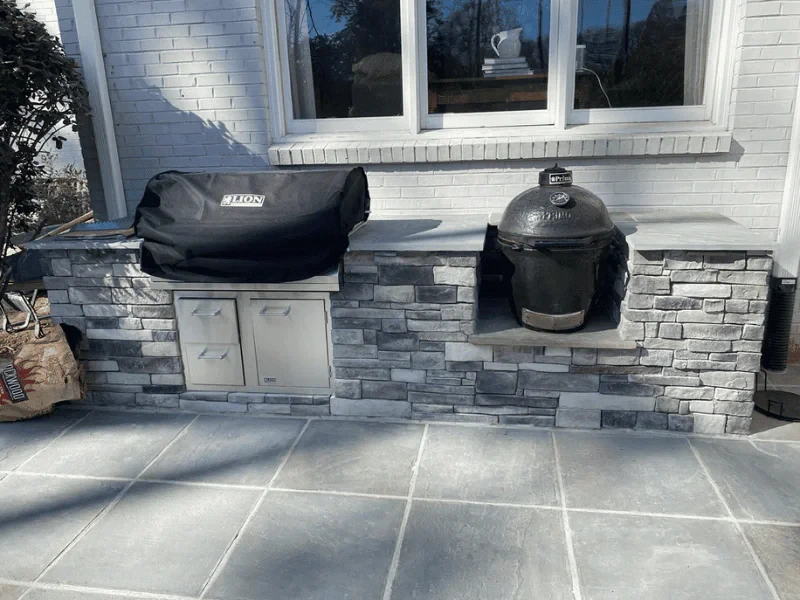
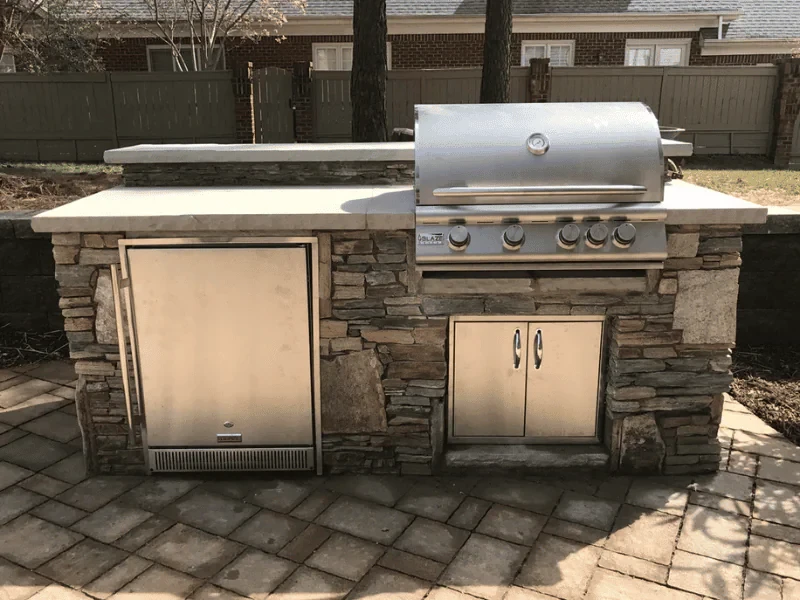
For smaller spaces, a straight-line layout along a wall or fence works well. Everything lines up in a row, and you’re not wasting square footage. You’ll want at least 36 inches of counter space for prep work, though 48 inches feels more comfortable if you have the room. This setup is simple, cost-effective, and gets the job done without overcomplicating things.
L-shaped layouts fit nicely into corners and work for small to medium spaces. You get more counter space and can separate your cooking zone from your prep area, which helps when you have someone helping you. One leg of the L typically holds the grill and cooking surfaces, while the other handles prep, serving, or storage.
U-shaped designs give you the most workspace and storage but need more square footage to avoid feeling cramped. This layout puts you in the center of the action with everything within arm’s reach. It’s ideal for serious outdoor cooks who want a full kitchen experience, complete with multiple cooking surfaces, ample storage, and dedicated zones for different tasks.
Galley layouts work when you’re dealing with a narrow space. Two parallel runs of cabinets and counters create a corridor kitchen that maximizes a tight footprint. Just make sure the aisle between them is wide enough that cabinet doors and drawers don’t smack into each other when opened.
No matter which layout you choose, leave room for people to move around you while you’re cooking. An outdoor kitchen that forces guests to squeeze past you to grab a drink defeats the whole purpose of keeping the cook connected to the party.
Outdoor Kitchen Ideas: Essential Features and Smart Additions
Let’s talk about what actually goes into an outdoor kitchen beyond the obvious grill. A sink changes everything. It means you can wash vegetables, rinse dishes, and clean up without trekking back inside every few minutes. You’ll need plumbing run to the location, but the convenience is worth it. Pair the sink with a small refrigerator, and suddenly you’re not making constant trips indoors for condiments, drinks, or ingredients.
Storage matters more than most people realize. You need somewhere to keep grilling tools, serving platters, cleaning supplies, and everything else that makes outdoor cooking functional. Base cabinets work well for larger items, while drawers keep utensils organized and easy to grab. If your layout allows, consider a trash drawer or pull-out bin so you’re not dealing with garbage bags sitting out in the heat.
Counter space is where a lot of outdoor kitchens fall short. You need room to set down plates, stage ingredients, and rest hot pans. Think about your busiest cooking days and how much surface area you actually use. Skimping on counter space to save a few feet of cabinetry will frustrate you every time you use the kitchen.
Built-in grills offer a cleaner look than drop-in models and integrate seamlessly with your countertops and cabinets. Side burners give you a place to simmer sauces or sauté vegetables without firing up the main grill. If you’re serious about outdoor cooking, you might want a smoker, pizza oven, or even a griddle for breakfast cookouts.
Lighting extends your usable hours well past sunset. Task lighting over prep areas helps you see what you’re doing, while ambient lighting around seating areas creates atmosphere. Don’t forget about the pathway between your outdoor kitchen and your house so you’re not navigating in the dark with your hands full.
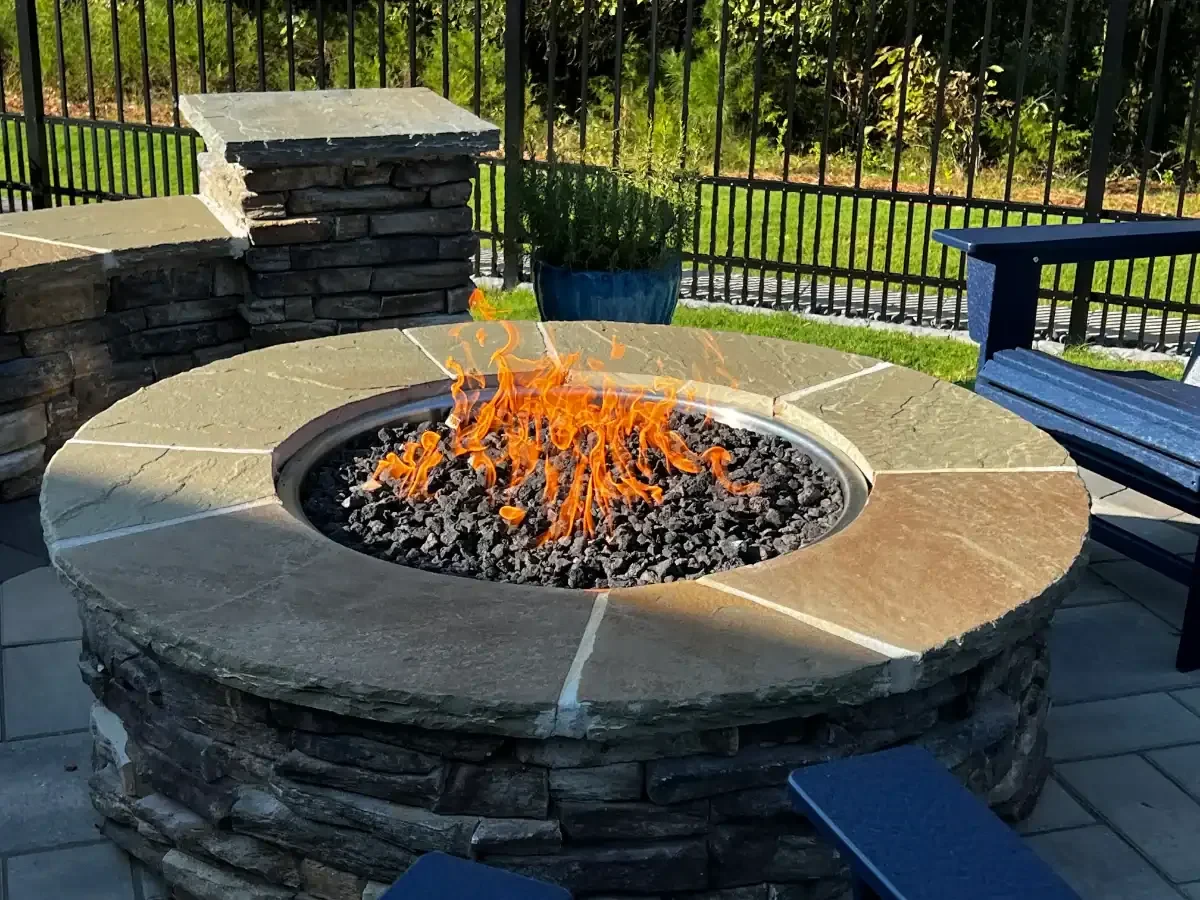
Bar seating or a dining area nearby keeps guests close while you cook. A simple countertop overhang with a few stools works for casual meals, while a separate dining table handles larger gatherings. Fire pits or fireplaces add warmth on cooler evenings and give people a reason to stay outside longer, which is exactly what you want from an outdoor living space.
Want live answers?
Connect with a Union Landscaping and Hardscape expert for fast, friendly support.
Best Outdoor Kitchen Materials for Mecklenburg County Weather
Material selection makes the difference between an outdoor kitchen that lasts decades and one that needs repairs or replacement within a few seasons. Mecklenburg County’s climate isn’t extreme, but you’re dealing with humid summers, occasional winter freezes, intense sun, and plenty of rain. Your materials need to handle all of it without warping, rusting, fading, or falling apart.
Choosing the wrong materials is one of the most expensive mistakes homeowners make. Indoor-grade cabinets rot in outdoor conditions. Countertops that aren’t sealed properly stain and crack. Cheap appliances rust out in a year or two. You’re better off investing in quality materials upfront than dealing with repairs and replacements that cost more in the long run.
Outdoor Kitchen Cabinets: What Actually Holds Up
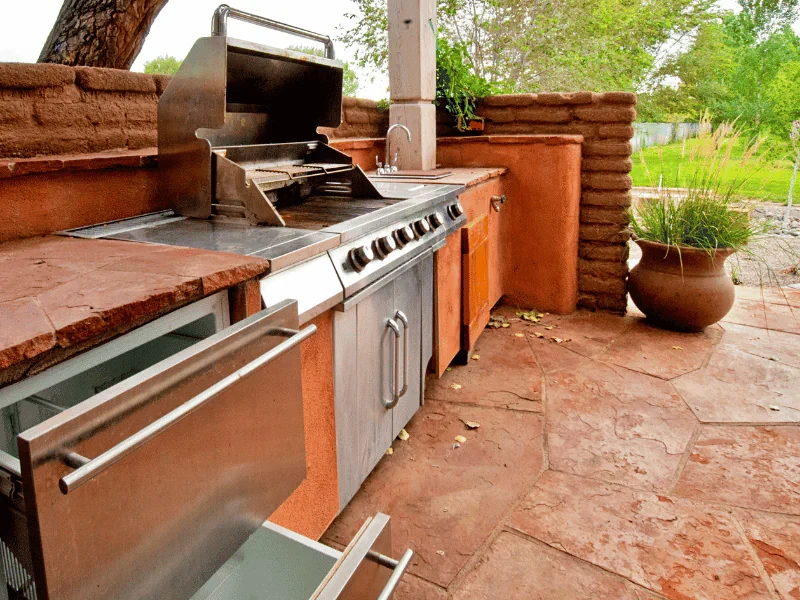
Stainless steel dominates outdoor kitchen cabinets for good reason. It resists rust and corrosion, cleans easily, and handles temperature swings without warping. Marine-grade stainless steel (304 or 316 grade) is the standard for outdoor use. The main drawback is cost and the fact that it can get hot to the touch in direct sun, but a powder-coated finish solves both the heat issue and gives you color options beyond plain steel.
HDPE (high-density polyethylene) is gaining popularity as a durable, eco-friendly alternative. It doesn’t absorb moisture, which means no mold, mildew, or rot. It’s resistant to insects, won’t crack or splinter, and requires almost no maintenance. Modern manufacturing techniques create finishes that look like real wood without the upkeep. It’s quieter than metal cabinets and typically falls in the mid-range price bracket, making it a solid value.
Marine-grade aluminum offers similar corrosion resistance to stainless steel but weighs less and costs slightly less. It’s commonly used in coastal applications where saltwater exposure is a concern, so it handles North Carolina humidity without issue. Powder coating protects the surface and allows for customization with different finishes and colors.
Wood cabinets can work outdoors if you choose the right species and maintain them properly. Teak is naturally weather-resistant and ages to a beautiful silver-gray patina. Cedar and redwood also hold up well with regular sealing. But wood requires ongoing maintenance—sealing, staining, or painting every year or two—and it’s not fireproof, which matters when you’re building around heat sources like grills.
Concrete, brick, and stone offer incredible durability and a timeless aesthetic. They handle heat exceptionally well and won’t rust or rot. The trade-off is weight (they require solid foundations), installation complexity, and the difficulty of cleaning spills or grease off porous surfaces. They’re best used for structure and cladding rather than functional storage.
Whatever material you choose, make sure any built-in grill includes an insulated jacket or liner. This metal sleeve creates a barrier between the grill’s heat and your cabinetry. Without it, you’re risking a fire that could destroy your entire outdoor kitchen. It’s a non-negotiable safety feature that we include by default in every installation.
Outdoor Kitchen Countertops and Surfaces That Last
Countertops take a beating in outdoor kitchens. They need to handle hot pans, sharp knives, spills, weather, and UV exposure without staining, cracking, or fading. Granite remains one of the most popular choices because it’s naturally heat-resistant, durable, and available in dozens of colors. It does need sealing every couple of years to prevent staining, but that’s minimal maintenance compared to other materials.
Quartzite offers similar durability to granite with better stain resistance. It won’t yellow or fade from sun exposure like some engineered quartz products can. It handles high heat well, though you still want to use trivets for extremely hot items. The cost is comparable to granite, and it delivers a high-end look that holds up over time.
Concrete countertops offer complete customization in terms of shape, color, and finish. They’re heat-resistant, durable, and can be formed to fit any layout. Concrete requires sealing to prevent water penetration and staining, and it can develop hairline cracks over time due to temperature changes. The industrial aesthetic works well in modern outdoor kitchen designs.
Tile and stone surfaces provide texture and visual interest, but they’re susceptible to chipping and the grout lines require regular cleaning and resealing. Porcelain tile stands up better than ceramic in outdoor applications. Natural stone tiles like slate or travertine create a rustic look but need proper sealing to resist moisture and stains.
Soapstone is heat-resistant and non-porous, making it ideal for outdoor use. It’s softer than granite, which means it scratches more easily, but those scratches can be buffed out. It develops a natural patina over time that many homeowners find appealing. It requires periodic oiling to maintain its appearance.
Avoid materials that aren’t rated for outdoor use. Standard laminate countertops will delaminate in weather. Unsealed wood will rot. Marble stains easily and isn’t ideal for outdoor cooking areas. When you’re investing in an outdoor kitchen, the countertop isn’t the place to cut corners. Choose materials specifically engineered for exterior applications, and you’ll avoid expensive replacements down the road.
Planning Your Outdoor Kitchen the Right Way
A well-planned outdoor kitchen transforms how you use your backyard. It’s not just about having a place to grill—it’s about creating a space where cooking becomes part of the gathering instead of something that pulls you away from it. When you get the layout right, choose materials built for North Carolina weather, and design around how you actually cook and entertain, you end up with an outdoor kitchen that adds real value to your home and your lifestyle.
The key is thinking through the details before you start building. How will you use the space? What features matter most to your cooking style? Which materials will hold up in Mecklenburg County’s climate without constant maintenance? Those decisions shape whether your outdoor kitchen becomes your favorite part of your home or a source of frustration and expensive repairs.
If you’re ready to move from planning to building, we bring the expertise to turn your vision into reality. From custom hardscape design to expert installation, we handle every aspect of creating outdoor living spaces that work beautifully and last for years.