
Small yard, small bill. That’s what most homeowners expect, and it’s only partly true. So how much does landscaping cost for a small yard in Monroe or Charlotte? Less than a full backyard rebuild, of course, but often more per square foot than people figure, because a good share of any landscaping cost has very little to do with how big the space actually is. What drives the number is what you’re putting in, what has to come out first, and what the ground underneath is like.
Nobody can quote a flat number here. A contractor who prices a small yard sight unseen is really just guessing at the soil, the slope and how hard it’ll be to get a crew and materials around to the back. What we can do is walk through where the money goes, so the estimate makes sense when it lands. For the bigger picture, our guide to what landscaping is and how much it costs covers the basics.
Why a Small Yard Doesn’t Mean a Small Price
Every job carries costs that show up no matter the size. A crew still has to load the trailer, drive out, set up, clean up and haul debris away at the end of the day, and someone still has to measure the site and work out a plan before anything gets dug. Those pieces cost about the same for a tight courtyard as for a yard twice its size. Per square foot, that adds up.
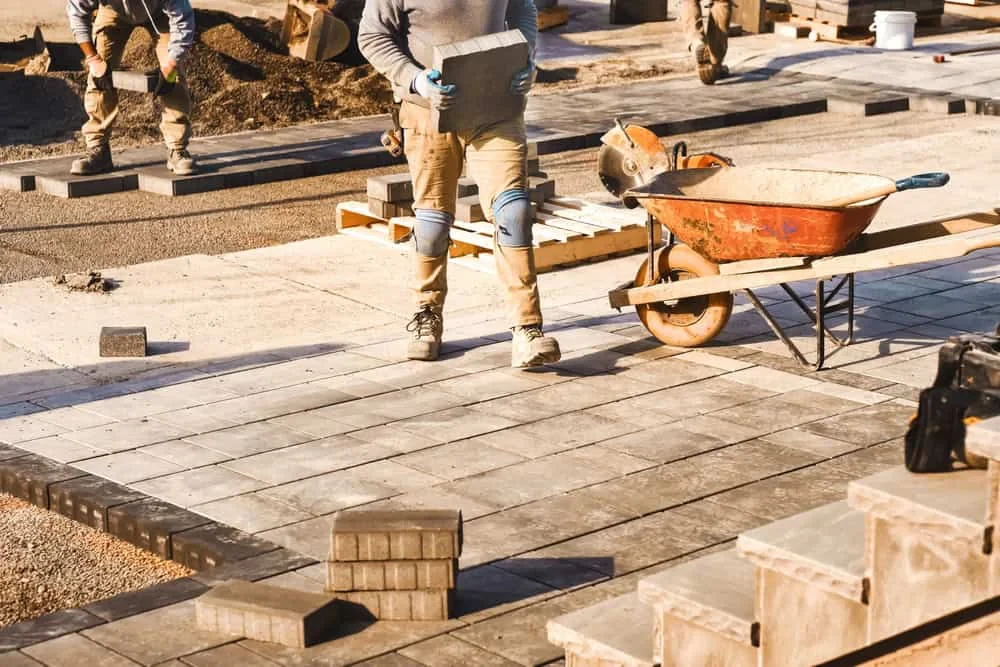
Access is the other piece. Plenty of small yards are small because they’re boxed in, like a townhome patio behind a privacy fence or a backyard you can only reach through a narrow side gate. If a skid steer won’t fit, the soil, stone and plants all move by wheelbarrow. That’s slow. And since labor is usually the biggest line on a residential landscaping quote, slow work shows up in the total pretty quickly.
Where the Money Goes on a Small Lot
On most small properties, the budget lands in a handful of places, and they don’t all cost the same.
Lawn is usually first. Sod costs more than seed up front, but on a small lot the gap in dollars is often modest, and you walk on a finished lawn within weeks instead of waiting a season. Around Charlotte, a lot of lawns are tall fescue, which does best when it’s seeded in fall, while Bermuda and zoysia tend to go in as sod during the warm months.
Beds and plants come next. Plant size is the easiest dial to turn here. A young shrub costs a fraction of a mature one and fills in within a few seasons, so starting smaller is one of the few savings that doesn’t cost you much in the long run. Mulch itself is cheap, though bed prep, edging and soil amendments add up faster than most people expect.
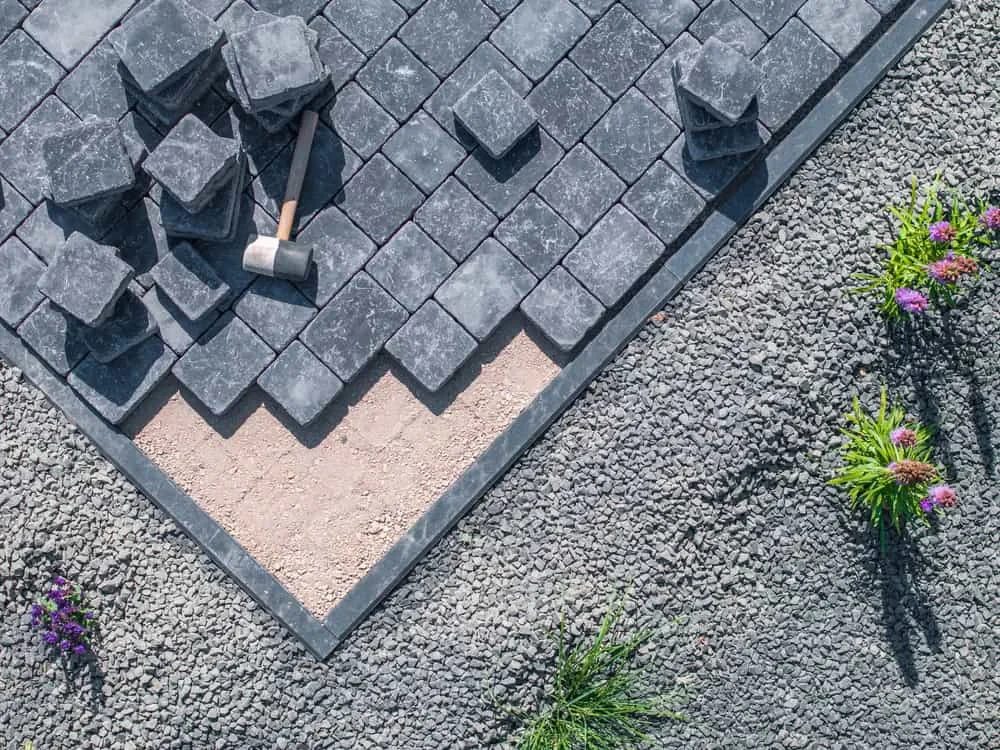
Hardscape is where small yards often spend the most money for the least square footage. A little paver patio tucked into a corner still needs digging, a compacted base, edge restraint and a slight pitch away from the house, which is the same work a bigger patio needs, just over less ground. Skimp on the base and it settles. Honestly, that’s the last place we’d cut.
Then there’s water. Red clay soil across the Piedmont doesn’t soak up rain quickly, and a small lot has less room to spread the runoff out. When water sits against the foundation or a neighbor’s yard drains into yours after every summer storm, drainage solutions belong in the budget before anything decorative does.
Local Conditions That Change the Number
Soil is the big one in Union and Mecklenburg County. On a lot of newer streets in places like Indian Trail and Waxhaw, the lots get graded down to hard subsoil when the house goes up, and there’s only a thin layer of topsoil left behind, if any. Planting straight into that is a gamble. So soil prep often becomes a real part of the landscape installation cost, even on a small lot.
Slope matters more than it looks. Even a gentle grade running toward the house means building up beds or reshaping the ground so water heads the other way. In many planned neighborhoods, HOA rules also cover plant lists, fence heights and patio materials, and redoing finished work to satisfy a board costs a lot more than getting approval first.
Timing plays a part too. Shrubs and trees planted in October usually settle in with far less watering than ones that go in during a July heat wave, when the clay bakes hard and new roots have to be nursed through weeks of hot afternoons. What you spend after the crew leaves can shift a fair bit depending on the month you start.
Getting More Out of a Smaller Budget
A few choices stretch a small yard budget further than others:
- Plan the whole yard once, then build it in phases as money allows.
- Handle grading and drainage before plants or sod go in.
- Go with younger plants and let them grow into the space.
- Spend on the spot you’ll use most, often the patio or the view from the kitchen window.
- Ask whether existing pavers, edging or healthy shrubs can stay.
Pro tip: Ask for the estimate broken out by area, like front beds, back patio and lawn. It’s the easiest way to see which piece could wait until next year without throwing off the rest of the plan.
What a Fair Quote Should Show
A quote for a small project should still read like a real plan. It ought to spell out the scope, the materials and plant sizes, the prep and grading, and where the debris ends up once the job’s done, so you can compare it line by line against anyone else’s. One line that says “landscape backyard” next to a number isn’t enough. Ask for more. Knowing how much landscaping costs for a small yard only helps if you can see what that number covers. For a closer look at how contractors price their time and design work, see our homeowner’s guide to how much a landscaper costs.
Frequently Asked Questions
Is it worth hiring a pro for a small yard?
Usually, yes. If the job involves a patio, grading or drainage, a pro is worth it, because those are the parts that cost the most to redo when they’re done wrong the first time. A simple bed refresh is more of a judgment call.
Does a small yard cost less to maintain?
In most cases. Less lawn means less mowing and fertilizing, and a small yard planted with shrubs and mulch beds instead of seasonal flowers takes very little upkeep.
Should I do the front yard or the backyard first?
It depends on what bothers you most. If water is pooling anywhere, start there, since drainage work can tear up whatever’s already planted nearby and nobody wants to pay for beds twice. Otherwise, pick the space you actually use.
Do I need a design for a small yard?
Even a simple sketch helps. In a tight space every foot counts, and a plan keeps the patio, beds and walkways from fighting each other for room once everything’s in the ground.
If you’re planning a small yard project in Monroe, Union County or around Charlotte, Union Landscaping & Hardscape is a family-owned crew based right here in Monroe, and we’re glad to walk the space with you and talk through what makes sense to tackle first.