Hardscaping turns a yard into usable space. A patio gives you somewhere to eat outside, a walkway connects the driveway to the backyard, and a seat wall around a fire pit makes the space feel finished. It also tends to be the biggest single line in a landscaping budget, so it’s worth understanding what drives the price before you request quotes.
At Union Landscaping & Hardscape, a family-owned company based in Monroe, NC, hardscaping is a core part of what we do. This guide explains how different hardscape features and materials compare in cost, why base preparation matters so much in this region’s clay soil, and what Charlotte and Union County homeowners should consider before they build.
Quick Answer
Hardscaping cost depends mainly on the size of the project, the material you choose, how much base preparation the site needs, the slope of the yard, and how easy the area is to reach. Hardscaping generally costs more per square foot than planting because it involves heavy materials, equipment, and precise labor. Poured concrete usually sits at the lower end, pavers in the middle, and natural stone at the higher end. Local conditions like clay soil and sloped lots can add to the scope, so an on-site estimate is the best way to price your project.
Table of Contents
- How Much Does Hardscaping Cost in Charlotte & Union County?
- How Costs Compare by Hardscape Feature
- Why Base Preparation Drives the Price
- Pavers vs. Poured Concrete vs. Natural Stone
- Important Factors That Affect Hardscaping Cost
- Hardscaping Considerations in Charlotte & Union County
- Common Hardscaping Problems
- What to Expect From a Hardscape Project
- Frequently Asked Questions
How Much Does Hardscaping Cost in Charlotte & Union County?
Every hardscape project is priced on its own conditions, so the most useful way to think about cost is to understand what goes into it. Most hardscaping quotes are built from four things: the surface material, the base underneath it, the labor to install both, and any site work needed first, such as removal, grading, or drainage.
Most projects also combine several features. A backyard patio with a seat wall and fire pit, connected to the driveway by a paver walkway, is priced as one project, but each piece adds to the total. That’s why two homeowners with the same size patio can receive very different quotes: one may need a retaining wall and drainage, while the other is building on flat, well-drained ground.
How Costs Compare by Hardscape Feature
| Feature | Relative Cost | Main Cost Drivers |
| Fire pit | Lower | Prefabricated kit vs. custom build, materials |
| Walkway | Lower to moderate | Length, material, grading needed |
| Seat wall | Moderate | Length, height, wall material |
| Paver patio | Moderate to higher | Size, paver type, base depth, shape |
| Pool deck and coping | Moderate to higher | Material, curves, slip resistance |
| Retaining wall | Higher | Height, length, drainage, reinforcement |
Paver Patios
Paver patios are the most common hardscape project. Size has the biggest effect on the total, followed by the paver material and how much base work the site needs. Curved edges, multiple levels, and intricate patterns add cutting and labor time. For details on materials, layouts, and our process, see paver patio installation.
Walkways
Walkways range from simple stepping-stone or gravel paths to longer paver or natural stone runs. Material, length, and how much grading the path needs all affect cost. Learn more about paver walkway installation.
Seat Walls and Retaining Walls
Seat walls are short, freestanding walls that add built-in seating and define a patio’s edge. Retaining walls hold back soil on sloped ground and generally cost more, because they need deeper footings, drainage behind the wall, and sometimes reinforcement. See seat wall installation for options.
Fire Pits
A fire pit can be one of the more affordable hardscape features, especially when it’s added to a patio that’s already being built. Custom built-in designs cost more than simpler options. Explore fire pit installation.
Pool Decks and Coping
Pool decks and coping are priced by material and area, with added cost for cutting and fitting around curves. Slip resistance and heat retention matter more here than on a typical patio. Learn more about pool coping installation.
Why Base Preparation Drives the Price
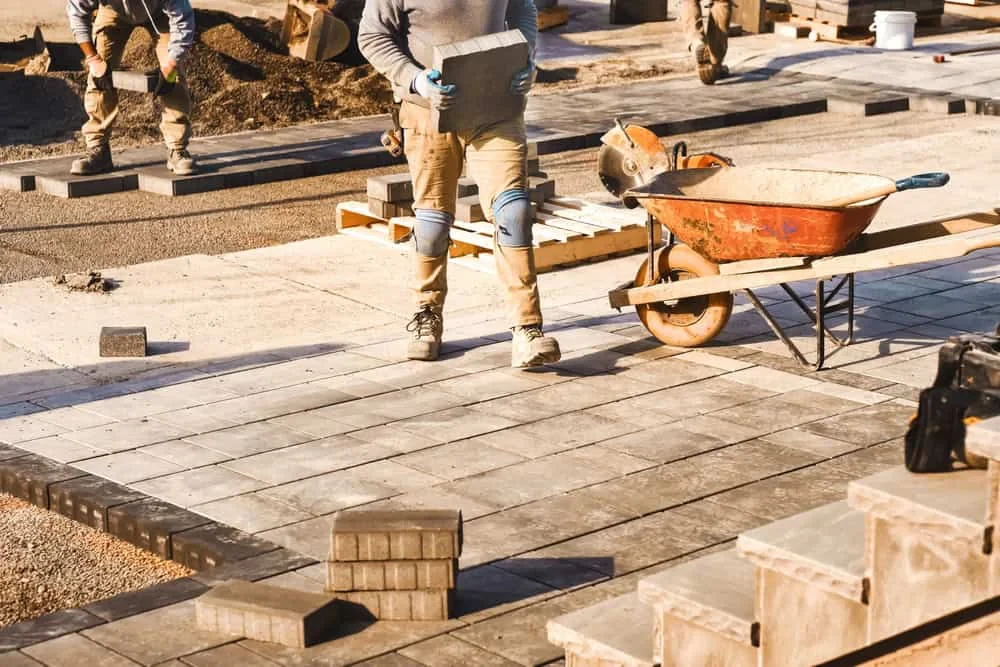
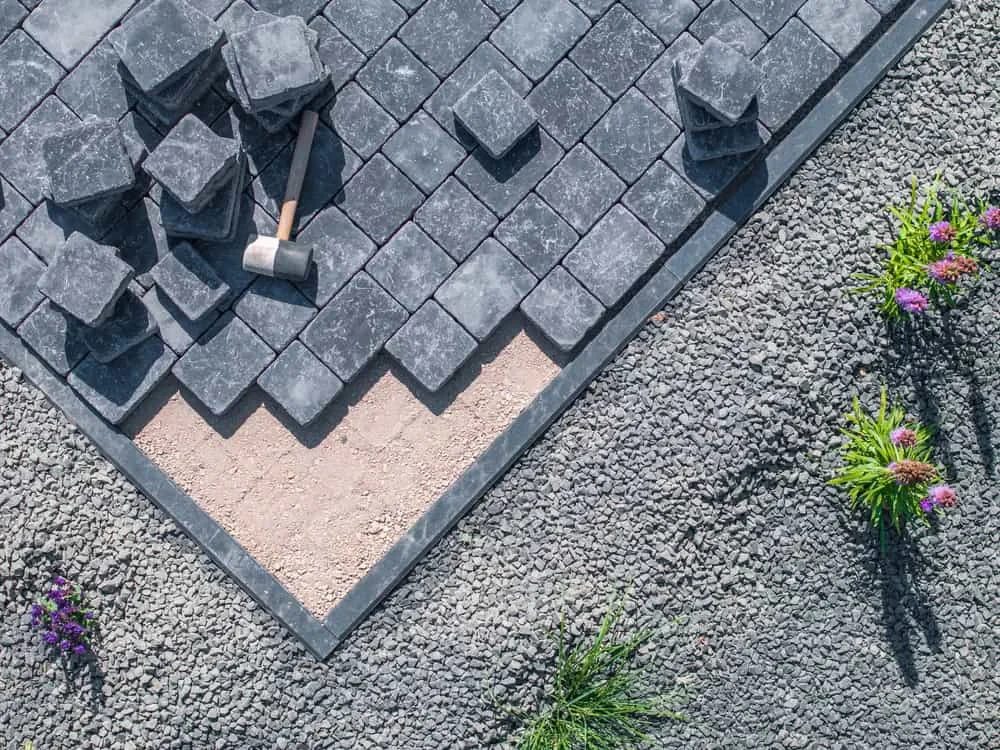
What sits under a patio matters more than what sits on top of it. A properly built paver patio starts with excavation below the finished surface, followed by a compacted base of crushed stone, a leveling layer, the pavers themselves, edge restraints, and joint sand that locks everything together. Industry installation guidance, such as that published by the Concrete Masonry & Hardscapes Association, calls for compacting the base in layers rather than all at once.
Each of those steps takes labor and material, and none of them show once the patio is finished. That’s why two quotes for the same size patio can differ significantly. The lower one may be using a thinner base or skipping compaction steps, and the difference often shows up a few years later as sinking, shifting, or uneven pavers.
In clay soil, base prep matters even more. Clay holds water and expands when wet, so a well-drained, well-compacted base is what keeps a patio stable through wet springs and cold winters.
Pavers vs. Poured Concrete vs. Natural Stone
Material is the biggest choice you’ll make, and it shapes both the price and how the patio ages.
| Material | Relative Cost | Notes |
| Poured concrete | Lower | Lowest upfront cost; cracks are hard to repair invisibly |
| Stamped concrete | Moderate | Decorative look; same cracking risk as poured |
| Concrete pavers | Moderate | Individual units can be lifted and reset |
| Brick | Moderate to higher | Classic look; more labor-intensive |
| Natural stone / flagstone | Higher | Most distinctive look; widest price range |
Poured concrete wins on upfront cost. Pavers cost more, but individual pieces can be lifted and reset if the ground settles or a repair is needed, which is useful on clay soil. Natural stone offers the most distinctive look, and its price varies widely depending on the stone and how it’s cut.
Important Factors That Affect Hardscaping Cost
Size and Shape
Bigger patios cost more in total but often less per square foot. Curves, multiple levels, and complex patterns add cutting and labor time.
Slope and Elevation
Level ground is the least expensive place to build. Sloped yards may need retaining walls, steps, or additional base to create a flat, stable surface, which adds to the scope.
Removal of Existing Hardscape
Breaking out and hauling away an old concrete slab or failing pavers adds cost before new work begins.
Drainage
Patios need to shed water away from the house. If a yard already has drainage problems, yard drainage solutions may need to be part of the project.
Access
Hardscaping involves heavy materials and equipment. Tight side yards or long carries to the backyard increase labor time.
Hardscaping Considerations in Charlotte & Union County
Local conditions shape how hardscape should be built here. Around Monroe and the rest of the Piedmont, red clay is the main factor. It drains slowly, holds moisture, and shifts with wet and dry cycles, so base depth, compaction, and drainage deserve extra attention.
Winters bring regular freezing nights, and water trapped under a patio can expand and push pavers out of alignment. Summer thunderstorms bring heavy bursts of rain that test how well a patio sheds water.
Many lots in Union County and Charlotte also have noticeable slope, which is where seat walls and retaining walls come in. Permit requirements for retaining walls vary by town and wall height, so check with your local planning office or ask your contractor before building. If you live in an HOA community, approval for patios and walls is usually required before work starts.
Common Hardscaping Problems
A Thin or Poorly Compacted Base
This is the most common reason patios sink, shift, or develop ruts. It’s also the hardest problem to see when the patio is new, which is why asking about base depth and compaction is worth doing when you compare quotes.
No Plan for Water
A patio that slopes toward the house, or a retaining wall without drainage behind it, will cause problems over time. Water management should be part of the design, not an afterthought.
Using the Wrong Wall for the Job
A seat wall isn’t built to hold back soil. Using decorative wall construction where a structural retaining wall is needed can lead to bulging or failure. Taller retaining walls may also need engineering or a permit.
What to Expect From a Hardscape Project
A hardscape project usually starts with a site visit to measure the space, check slope and drainage, and talk through materials and layout. From there, you’ll receive a design or layout and a written estimate.
Once approved, installation follows a set order: marking the layout, excavation, base installation and compaction, setting the surface material, cutting edges, installing edge restraints, and filling joints. The timeline depends on the size of the project, the weather, and how much site work is needed first.
Frequently Asked Questions
Is hardscaping worth the cost?
For most homeowners, yes. A well-built patio or walkway adds usable living space, needs relatively little upkeep, and lasts for many years when the base is built correctly.
What is the least expensive patio material?
Gravel and poured concrete are usually the least expensive options. Pavers and natural stone cost more but offer more design flexibility and easier repairs.
Do I need a permit for a patio or retaining wall?
Many ground-level patios don’t need one, but retaining walls above a certain height often do. Rules vary between Charlotte, Mecklenburg County, and the towns of Union County, so confirm locally before building.
Can hardscaping be done in phases?
Yes. Many homeowners build a patio first and add a fire pit, seat wall, or walkway later. Planning the full layout at the start makes each phase easier to add.
How long does a paver patio last?
With a properly prepared base and routine care, such as occasional cleaning and refreshing joint sand, a paver patio can last for decades.
Plan Your Hardscape Project With a Local Team
General guidance gives you a starting point, but your yard’s slope, soil, and layout determine the real number. If you’re planning a patio, walkway, or wall in Charlotte, Monroe, or anywhere in Union County, contact Union Landscaping & Hardscape to schedule a visit and request an estimate for your hardscape project.
Expert Reviewer: Angel Riquelme, Owner, Union Landscaping & Hardscape [confirm before publishing]
Angel leads Union Landscaping & Hardscape, a family-owned landscaping and hardscaping company based in Monroe, NC.