
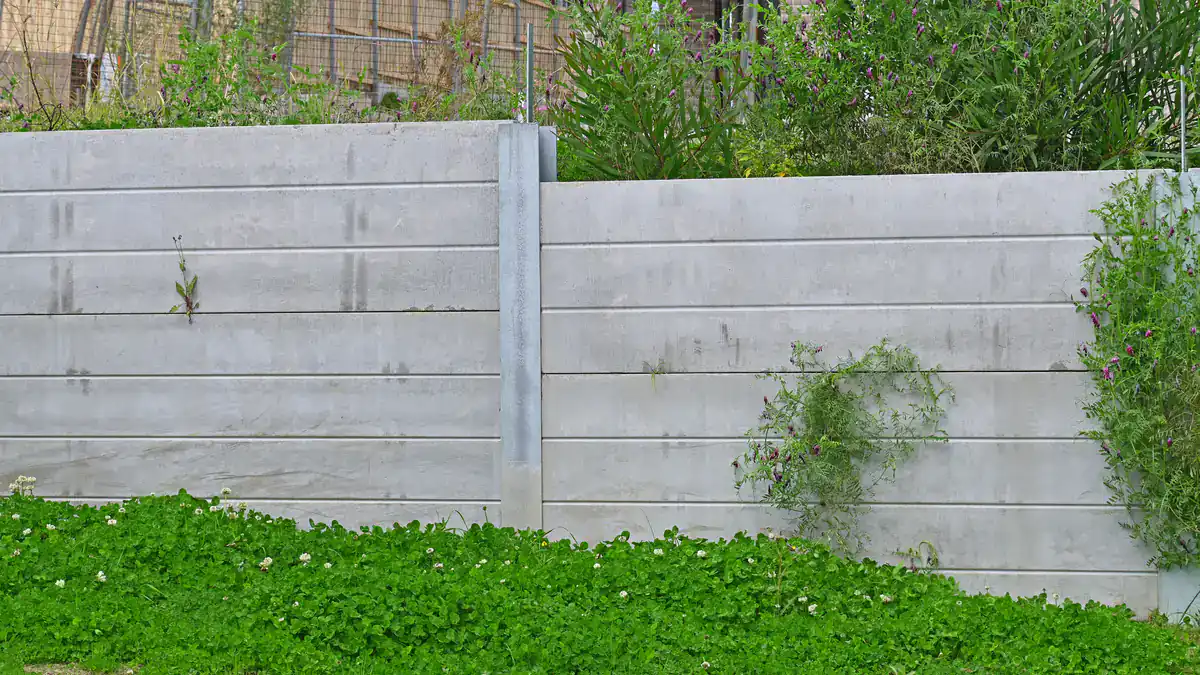
You’re not just building a wall. You’re stopping the mud from sliding into your driveway after storms. You’re creating flat, usable space where there was only a slope you couldn’t mow or plant on. You’re keeping water from pooling against your foundation and turning your crawl space into a swamp.
A properly installed retaining wall in Derita, NC handles the clay soil and drainage issues that come with this area. Charlotte gets 43 inches of rain a year—more than most places—and that water has to go somewhere. Without a retaining wall holding things in place, it takes your topsoil, your landscaping, and eventually starts threatening structures.
The difference shows up fast. No more sinkholes in the yard. No more replanting the same flower bed three times because it keeps washing out. No more watching chunks of your property slide downhill every time it rains hard. You get stable ground, better drainage, and outdoor space you can actually use.
Property values in the area can jump around 15 percent when you add a quality retaining wall. That’s real money—not just curb appeal.
Union Landscaping and Hardscape S Corp is a family-owned company based in Monroe, serving Derita, NC and the surrounding areas since 2021. We’ve built retaining walls in enough yards around here to know exactly how the clay soil behaves, where water tends to pool, and which materials hold up in North Carolina weather.
We’re not a national franchise reading from a script. We live here, work here, and understand the specific challenges that come with properties in Derita, NC. When we design a retaining wall, we’re accounting for local rainfall patterns, soil composition, and building codes—not guessing based on what works somewhere else.
Every project gets clear communication from start to finish. You’ll know what’s happening, when it’s happening, and what to expect next. No disappearing acts, no surprise changes.
First, we come out to look at your property. We’re checking the slope, the soil, where water runs during rain, and what you’re trying to accomplish. Some walls need engineering—anything over four feet requires it by North Carolina code—and we’ll tell you upfront if that’s the case.
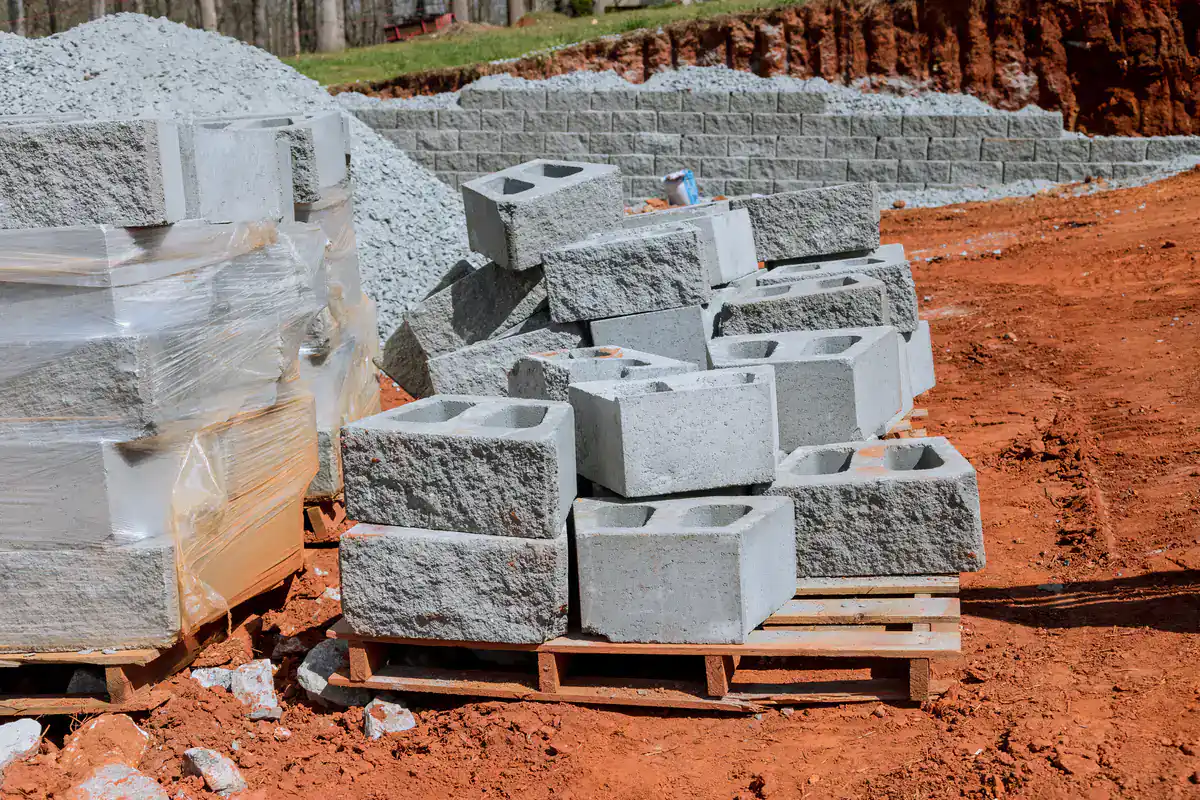
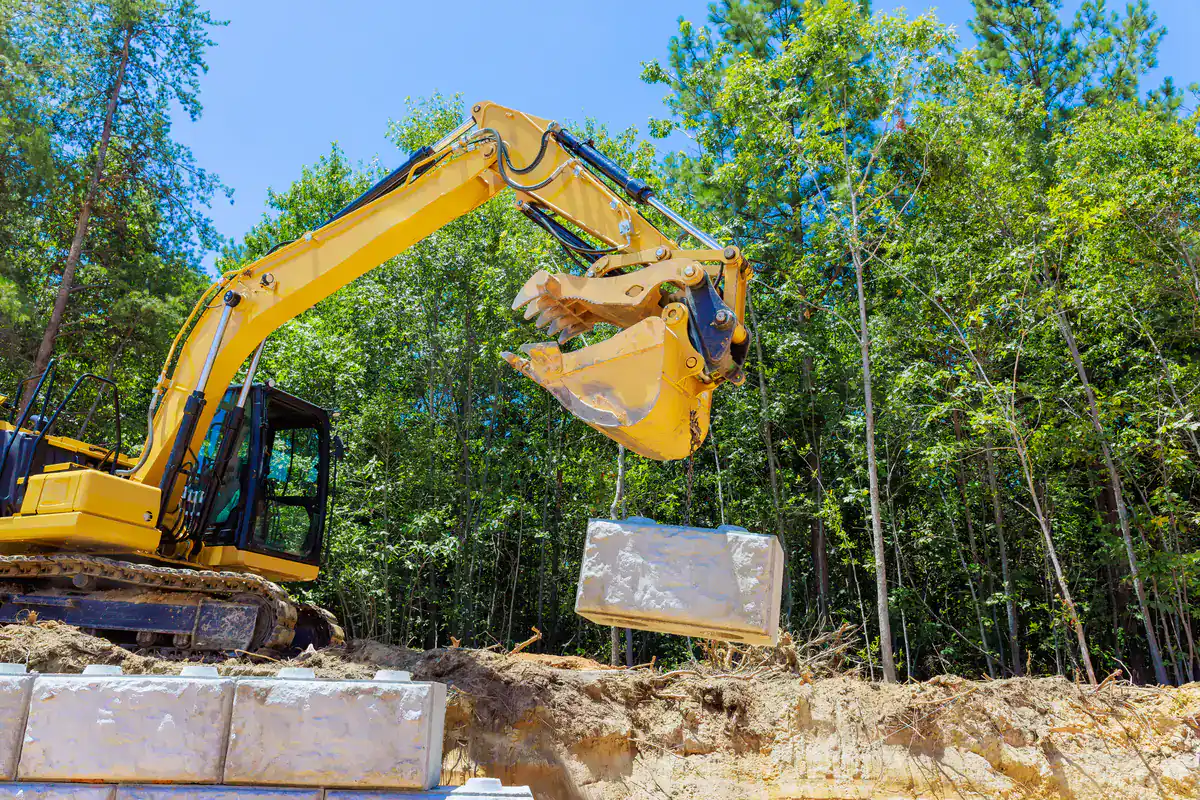
Once we’ve mapped out the plan, we prep the site. That means excavating to stable soil, not just stacking blocks on top of whatever’s there. We install a gravel base for drainage because water buildup behind a retaining wall is what causes failure. Then we build the wall using concrete retaining wall blocks or whatever material fits your property and budget best.
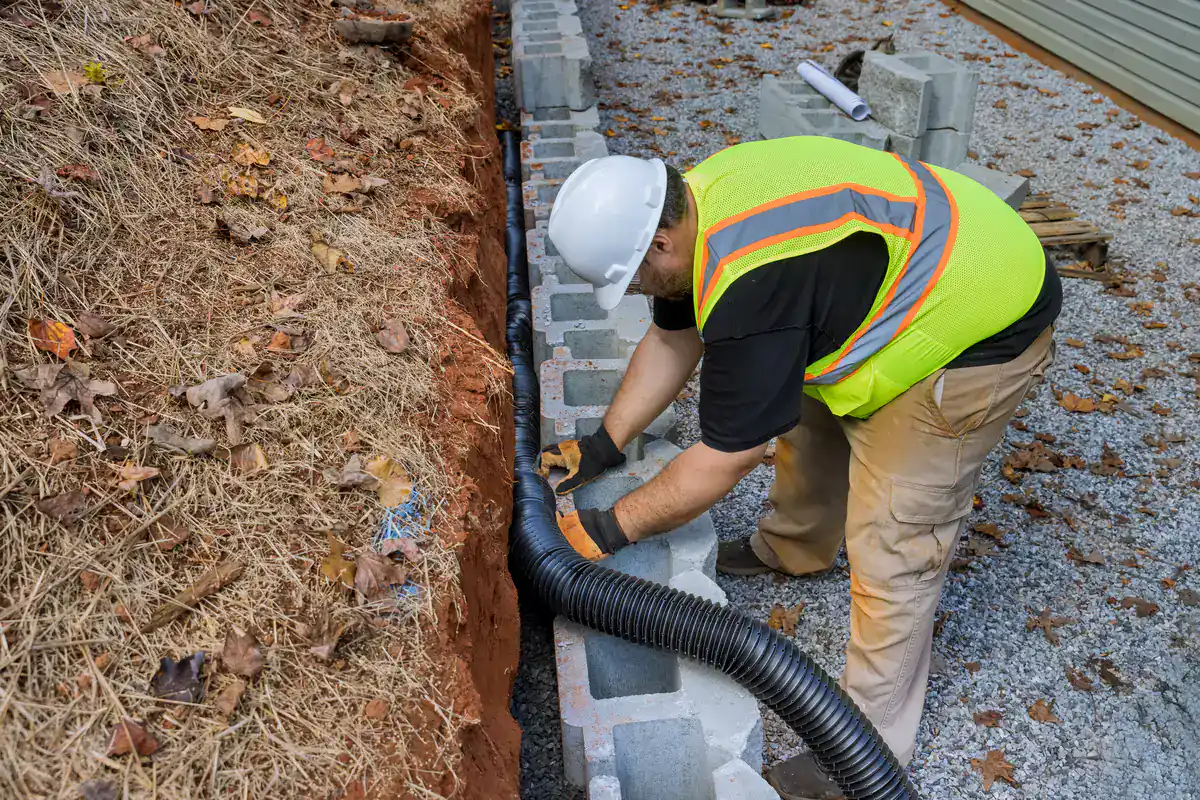
Drainage gets built into the system—not added as an afterthought. We’re installing perforated pipe, backfill, and proper grading so water moves away from the wall instead of sitting behind it and creating pressure. That’s what separates a retaining wall that lasts from one that leans or cracks within a few years.
After the wall is up, we backfill, compact, and finish the surrounding area so it blends with your existing landscape. You’re left with a functional, stable structure that does its job without constant maintenance or worry.
Ready to get started?
When we install retaining walls in Derita, NC, you’re getting more than retaining wall blocks stacked in a line. You’re getting a system designed to handle the specific conditions on your property—clay soil, heavy rainfall, slope angle, and drainage patterns.
We use quality materials that hold up. Concrete retaining wall blocks are durable, weather-resistant, and low-maintenance once they’re in. Natural stone is another option if you want that look. Either way, we’re not cutting corners on the base, the backfill, or the drainage components that you can’t see but that determine whether the wall works long-term.
For walls over four feet, we bring in licensed civil engineers to make sure everything meets North Carolina building codes. We also work with testing agencies to verify structural integrity. That’s not optional—it’s how you avoid problems down the road.
You also get expanded outdoor living space. A retaining wall can turn a sloped, unusable section of your yard into a flat area for a patio, garden beds, or just grass you can actually walk on. It’s not just about holding back soil—it’s about making your property more functional and more valuable. The average cost for professional retaining wall installation in the Charlotte area runs between $20 and $65 per square foot, depending on height, materials, and site conditions.
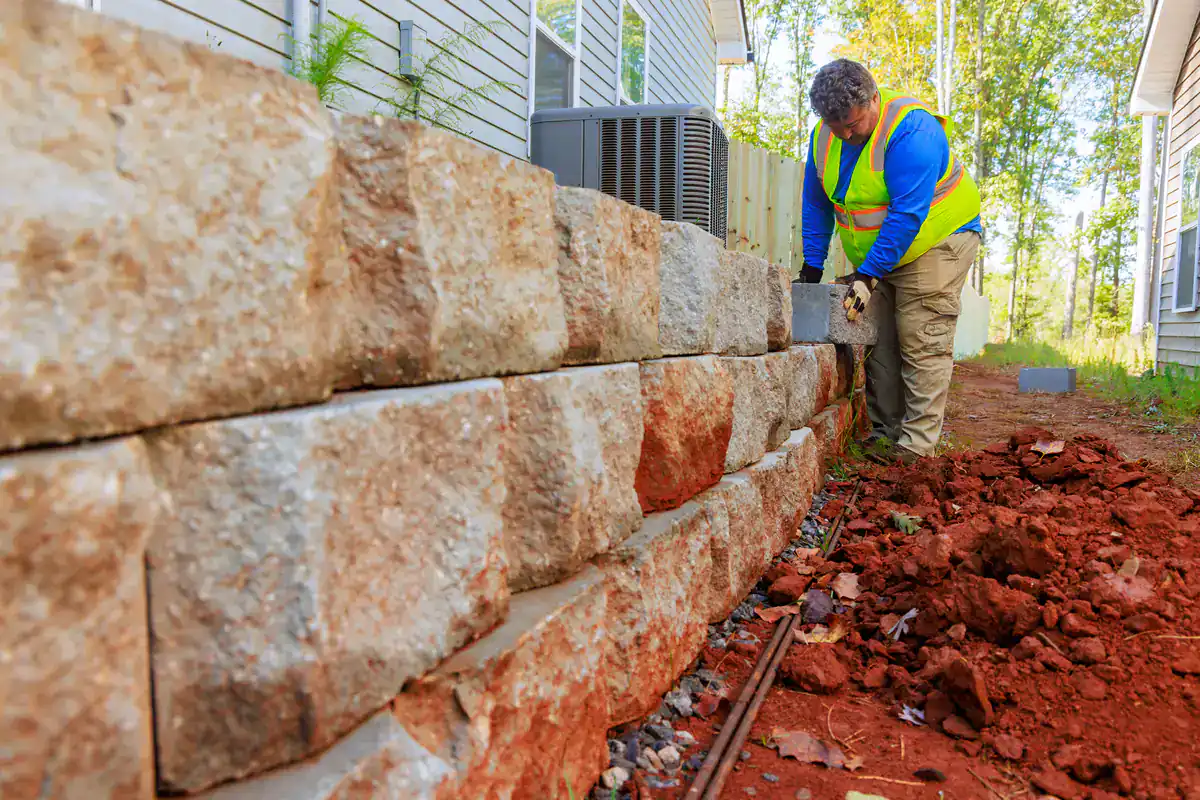
A properly built retaining wall using concrete retaining wall blocks or stone can last 50 to 100 years if it’s installed correctly. That means proper base preparation, drainage systems, and materials that match the site conditions.
The walls that fail early almost always have drainage problems. Water builds up behind the wall, creates pressure, and eventually pushes the whole thing over or causes cracking. We build drainage into every retaining wall installation in Derita, NC—perforated pipe, gravel backfill, and grading that moves water away from the structure.
Clay soil in this area makes drainage even more important because it doesn’t absorb water well. If you skip that step or try to DIY it without understanding how water moves through your property, you’re looking at repairs or replacement within a few years instead of decades.
It depends on the height. In North Carolina, retaining walls over four feet typically require a permit and engineering approval. Anything under that may not need a permit, but it’s worth checking with local building codes in Mecklenburg County to be sure.
Even if a permit isn’t required, building it right still matters. A three-foot wall built without proper drainage or base prep will fail just as fast as a taller one. We handle the permitting process when it’s needed and work with licensed engineers for walls that require it.
If you’re adding a retaining wall as part of a larger hardscape project—like a patio or outdoor living space—there may be additional requirements. We walk you through what’s needed for your specific project so there are no surprises halfway through the job.
Poor drainage is the number one reason. When water builds up behind a block wall retaining wall, it creates hydrostatic pressure that pushes against the structure. Over time, that pressure causes leaning, cracking, or complete failure.
The second most common issue is inadequate base preparation. If you’re building on unstable or poorly compacted soil, the wall will settle unevenly and start to shift. In Derita, NC, where clay soil is common, this is especially important because clay expands and contracts with moisture changes.
Using the wrong materials or skipping steps like proper backfill and compaction also leads to problems. Retaining wall blocks need to be installed on a level gravel base with drainage pipe behind them and the right backfill material. Cutting corners on any of those steps means you’re looking at repairs sooner than later. We don’t skip steps, and we don’t use subpar materials, because fixing a failed wall costs more than building it right the first time.
Yes, if it’s designed with drainage in mind. A retaining wall doesn’t just hold back soil—it can redirect water flow and prevent pooling in problem areas of your yard. That’s especially useful in Derita, NC, where clay soil and heavy rainfall create standing water and erosion issues.
We install perforated drainage pipe behind every retaining wall to collect water and move it away from the structure. That pipe connects to a drainage system that directs water to a safe outlet—not into your neighbor’s yard or against your foundation.
If your property has significant drainage problems, we may recommend additional solutions like French drains, grading adjustments, or catch basins. A retaining wall is often part of the solution, but it works best when it’s integrated into an overall drainage plan. The goal is to manage water before it becomes a problem, not just react to it after damage is already done.
Most professional retaining wall installations in the Charlotte area run between $20 and $65 per square foot, including materials and labor. A typical 50-foot retaining wall usually costs between $4,000 and $14,000, depending on height, materials, and site complexity.
Block wall retaining walls using concrete retaining wall blocks tend to be more affordable than natural stone, but both options are durable and low-maintenance. Taller walls cost more per square foot because they require engineering, deeper footings, and more robust drainage systems.
Site conditions also affect cost. If your property has difficult access, steep slopes, or requires significant excavation, that adds to the labor. Most contractors in the area have a $2,500 minimum for retaining wall projects. We give you a clear estimate upfront so you know what you’re paying for and why. There are no surprise charges halfway through the job.
DIY retaining walls usually work fine for small garden borders under two feet tall. Anything taller or structural—meaning it’s holding back significant soil or protecting your property—needs professional installation. The difference comes down to engineering, drainage, and long-term stability.
A professional retaining wall installation in Derita, NC includes proper excavation, a compacted gravel base, drainage systems, and materials that match the load requirements. We’re also accounting for soil type, water flow, and local building codes. DIY projects often skip the drainage step or don’t excavate deep enough, which leads to failure within a few years.
If the wall fails, you’re not just rebuilding it—you’re also dealing with the damage it caused when it collapsed. That could mean a flooded basement, a damaged driveway, or soil that’s now even more unstable than before. Professional installation costs more upfront, but it’s cheaper than fixing a failed DIY wall and the problems it creates.
Other Services we provide in Derita