Summary:
Your driveway does more than provide a place to park. It’s the first thing visitors see, and the right installation can add thousands to your home’s value while reducing maintenance headaches for decades.
This guide breaks down concrete, paver, and asphalt options with real costs, lifespan expectations, and what actually works in North Carolina’s climate. You’ll know which material fits your budget and how professional installation protects your investment.
Table of contents
How to Choose the Right Driveway Material
Three materials dominate residential driveways: concrete, pavers, and asphalt. Each has a place depending on what you value most.
Concrete offers the middle ground. It’s durable, relatively affordable, and lasts 30 to 40 years with basic maintenance. You’ll see it throughout Matthews and Indian Trail because it handles our climate reasonably well and doesn’t require constant attention.
Pavers cost more upfront but they’re three times stronger than concrete. Individual units can be replaced if damaged, and they flex with ground movement instead of cracking. If you’re planning to stay in your home long-term and want something that looks high-end, pavers often make sense.
Asphalt runs cheaper than concrete initially and works well in areas with temperature swings. The black surface hides oil stains better than concrete’s light color. The tradeoff is maintenance—you’ll need to seal it every few years to prevent deterioration.
Concrete Driveways: Costs and What to Expect
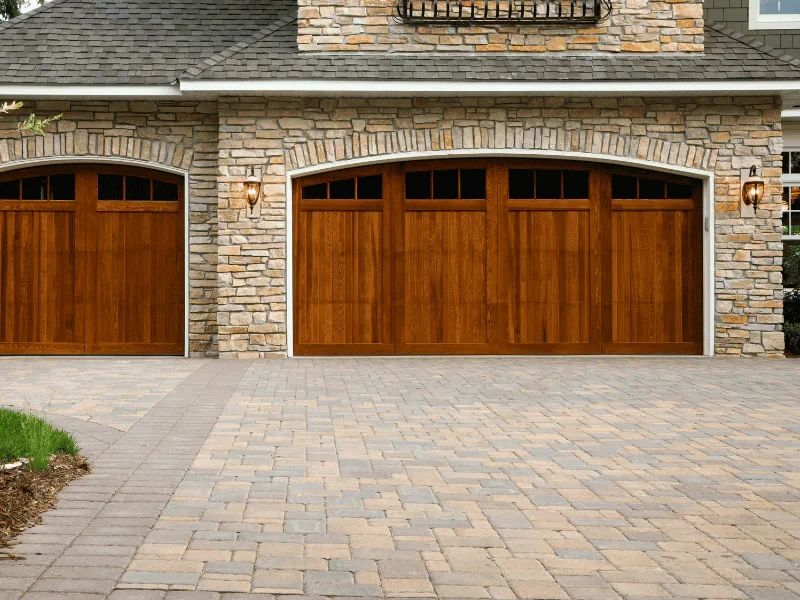
Concrete driveways in Mecklenburg County typically run $4 to $15 per square foot installed. For a standard two-car driveway around 600 square feet, expect $2,400 to $8,600 depending on thickness and any decorative finishes.
Plain gray concrete sits at the lower end. Add color, stamping, or decorative borders and you’re looking at $10 to $25 per square foot. The appeal is straightforward—you get a clean, modern surface that doesn’t demand much attention beyond occasional cleaning and sealing every two to three years.
The durability comes from proper installation. North Carolina’s clay soil expands and contracts with moisture changes. We excavate properly, compact a stable base, and include expansion joints to prevent cracking. Skip these steps and you’ll see problems within the first few years.
Concrete works best in hot climates because it reflects heat rather than absorbing it like asphalt. Our humid summers don’t bother it. The freeze-thaw cycles we occasionally see can cause surface scaling if the concrete wasn’t mixed with proper air entrainment or if deicing chemicals get overused.
Maintenance is minimal but not optional. Seal it to protect against stains from oil and other vehicle fluids. Clean spills quickly because concrete is porous and absorbs liquids. Pressure wash annually to remove dirt and grime. Handle these basics and you’re looking at decades of service.
Repairs present the main drawback. When concrete cracks, patching it creates visible seams that rarely match the original color. Large cracks often mean replacing entire sections. If appearance matters and you want repairs to be invisible, pavers offer a better solution.
The lifespan of 30 to 40 years assumes you maintain it. Neglect sealing and stain removal, and you’ll see deterioration accelerate. For homeowners who want something reliable without constant upkeep, concrete hits the sweet spot between cost and performance.
Paver Driveways: Higher Cost, Better Longevity
Paver driveways cost $10 to $30 per square foot, putting a typical installation between $6,000 and $18,000. That’s noticeably more than concrete or asphalt, but the difference buys you something concrete can’t match: individual units that can move slightly without cracking and can be replaced one at a time if damaged.
Pavers handle 8,000 to 12,000 pounds per square inch compared to concrete’s 2,500 to 3,000 PSI. That strength matters when you’re parking heavy vehicles or dealing with ground movement from our clay soil. They’re built to flex, so seasonal expansion and contraction doesn’t create the same cracking issues you see with solid concrete slabs.
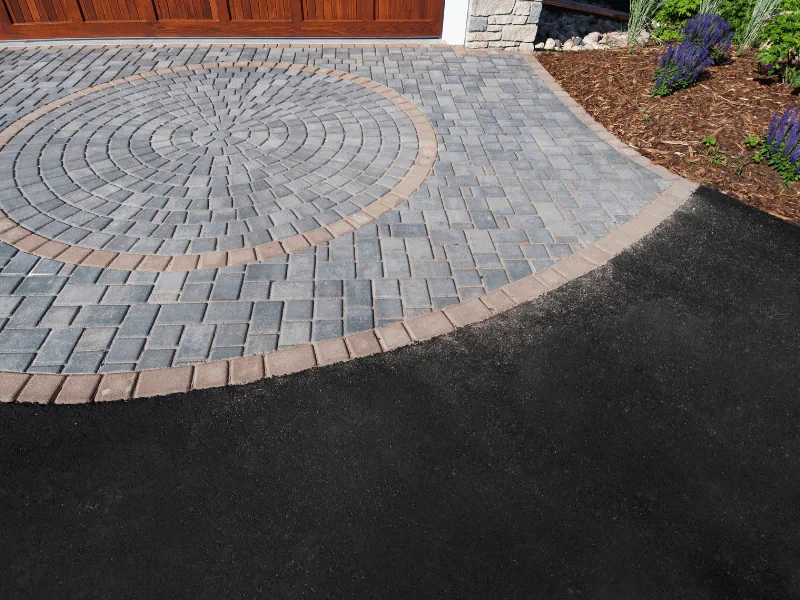
The design flexibility stands out. You can choose from concrete pavers, clay brick, or natural stone in various colors and patterns. Want a herringbone pattern in earth tones? Done. Prefer a clean linear look in gray? That works too. The customization lets you match your home’s style in ways plain concrete doesn’t.
Installation takes longer than pouring concrete. Each paver gets placed individually over a compacted base with proper drainage built in. The gaps between pavers get filled with polymeric sand that hardens to lock everything in place while still allowing water to drain through.
Maintenance involves re-sanding those joints every few years and occasional cleaning. Individual pavers can be pulled up to access utilities underneath, then replaced without visible repairs. If one cracks or stains badly, you swap it out. Try that with a concrete slab.
The lifespan runs 25 to 75 years depending on material quality and installation. Natural stone pavers last longest, followed by clay brick, then concrete pavers. All three outlast standard concrete when properly installed.
Weeds can grow between pavers if you don’t maintain the polymeric sand. Pressure washing dislodges sand, so you’ll need to re-apply it after cleaning. Some homeowners see this as a hassle. Others appreciate that it’s straightforward maintenance rather than dealing with cracks spreading across an entire slab.
For Gastonia and Monroe homeowners planning to stay long-term or wanting something that adds real curb appeal, pavers justify the higher cost. You’re buying durability, easier repairs, and a high-end look that holds up better than alternatives over decades.
Want live answers?
Connect with a Union Landscaping and Hardscape expert for fast, friendly support.
Understanding Driveway Installation Costs in North Carolina
Installation costs vary based on material choice, driveway size, site preparation needs, and whether you’re replacing an existing driveway or starting from scratch. The numbers matter because this isn’t a project you want to do twice.
Asphalt runs $7 to $13 per square foot installed. A 600-square-foot driveway costs roughly $4,200 to $7,800. That’s the most affordable paved option upfront, but factor in sealing costs every three to five years at $300 to $500 per application.
Concrete sits in the middle at $4 to $15 per square foot, or $2,400 to $9,000 for a standard driveway. The range depends on thickness, decorative finishes, and how much site prep your property needs. Add another $1 per square foot if you’re tearing out an old driveway first.
Pavers cost the most at $10 to $30 per square foot. That same 600-square-foot driveway runs $6,000 to $18,000. High-end natural stone pushes toward the upper range while concrete pavers stay closer to $10 to $15 per square foot.
These prices include professional installation, which matters more than most homeowners realize. Proper base preparation, drainage, and compaction prevent the settling and cracking that plague cheap installations.
What Affects Your Final Installation Price
Site preparation drives cost more than most expect. If your property has poor drainage, slopes awkwardly, or sits on unstable soil, we need to address those issues before laying any surface material. Excavation, grading, and drainage solutions add to the bill but prevent expensive problems later.
Mecklenburg County’s clay soil requires specific base preparation. Clay expands when wet and contracts when dry, creating movement that cracks poorly installed driveways. We excavate 8 to 12 inches deep, install a compacted gravel base, and ensure proper drainage. Skipping these steps to save money guarantees problems.
Removal of existing driveways adds roughly $1 to $2 per square foot. If your old concrete or asphalt needs to go, factor in disposal costs too. Some contractors include removal in their quote; others charge separately. Get clarity upfront.
Thickness matters for longevity. Residential driveways should be at least 4 inches thick, but 5 to 6 inches handles heavier vehicles better. Thicker installations cost more in materials but last longer and resist cracking from vehicle weight.
Decorative elements increase costs but can justify the expense if curb appeal matters. Stamped concrete, colored concrete, or intricate paver patterns add $3 to $10 per square foot depending on complexity. You’re paying for labor and materials, but the visual impact can be significant.
Permit requirements vary by location. Most municipalities in Union County and Mecklenburg County require permits for driveway work, especially if it affects drainage or sits near property lines. Permit fees run $50 to $200 typically. We handle permitting as part of our process, but DIY attempts often hit permitting snags that delay projects.
Labor accounts for 40% to 70% of total cost depending on material. Concrete can be poured relatively quickly. Pavers require hand-placement of each unit, which takes more time. That labor difference explains part of the cost gap between materials.
Get multiple detailed quotes that break down materials, labor, site prep, and any extras. The cheapest bid often cuts corners on base preparation or uses lower-grade materials. You want contractors who explain what they’re doing and why, not just bottom-line numbers.
How Long Different Driveway Materials Actually Last
Lifespan matters when you’re investing thousands. You want to know what you’re buying and when you’ll face replacement.
Concrete driveways last 30 to 40 years with proper maintenance. Seal them every two to three years, clean spills promptly, and avoid harsh deicing chemicals. Neglect maintenance and you’ll see surface deterioration within 15 to 20 years. Cracks start small but spread, especially if water seeps in and freezes.
Asphalt driveways typically last 15 to 30 years. The wide range reflects maintenance quality. Seal it every three to five years and patch cracks promptly, and you’ll hit the upper end. Skip sealing and you’ll need replacement closer to 15 years. Asphalt deteriorates faster in hot climates, which matters during North Carolina summers.
Paver driveways last 25 to 75 years depending on material. Concrete pavers sit at the lower end, clay brick in the middle, and natural stone at the upper range. The modular design means individual damaged pavers get replaced rather than requiring full replacement. Properly installed paver driveways often outlast the homes they’re attached to.
Gravel driveways can last up to 100 years with a stable foundation, but they require constant maintenance. You’ll add fresh gravel regularly, deal with ruts from vehicle traffic, and fight weeds. Most homeowners in suburban Mecklenburg County skip gravel because it looks out of place and creates ongoing work.
Installation quality affects lifespan as much as material choice. A concrete driveway installed without proper base preparation and drainage might crack within five years. Pavers installed on inadequate base material will settle and shift. The cheapest installation rarely delivers the advertised lifespan.
Climate plays a role too. North Carolina’s humidity doesn’t significantly damage properly installed driveways, but freeze-thaw cycles can. Water seeps into cracks, freezes, expands, and makes cracks worse. Proper sealing and maintenance protect against this, but it’s why northern climates see more driveway damage than southern ones.
Your maintenance habits determine whether you hit the expected lifespan or fall short. Clean your driveway regularly, seal it as recommended, repair small issues before they become large ones, and you’ll get full value from your investment. Ignore it and even the best materials deteriorate faster than they should.
Making the Right Choice for Your Property
Your driveway choice comes down to budget, how long you plan to stay in your home, and how much maintenance you’re willing to handle. Concrete offers solid performance at moderate cost. Pavers deliver superior durability and appearance at higher upfront expense. Asphalt provides the most affordable entry point but demands regular maintenance.
What matters most is professional installation that accounts for North Carolina’s clay soil and climate. Proper base preparation, drainage, and material selection prevent the cracking, settling, and deterioration that turn a good investment into an expensive problem.
If you’re ready to move forward with a driveway installation in Mecklenburg County or Union County, we bring local expertise and attention to detail that protects your investment. We understand what works in this region and deliver installations built to last.