Summary:
Your backyard has potential you’re not using. A well-designed pergola transforms wasted outdoor space into a functional extension of your home—a place for morning coffee, weekend cookouts, or quiet evenings under the stars.
This guide covers how pergolas enhance outdoor living through shade, style, and increased usable space. You’ll see design ideas, material options, lighting integration, and how custom pergolas fit both your aesthetic and the way you actually live outside.
Table of contents
What Pergolas Actually Do for Your Outdoor Space
A pergola isn’t just a decorative structure. It’s a functional addition that solves real problems with outdoor living. The open-beam design provides partial shade, which means you get sun protection without feeling closed in. Air still flows through, keeping the space comfortable even on humid summer days.
Pergolas define areas in your yard that would otherwise blend together. They create an outdoor room—a specific zone for dining, lounging, or cooking. That definition makes the space feel intentional instead of random. When you have a clear purpose for an area, you use it more often.
They also increase your property’s usable square footage without the cost of adding interior space. You’re essentially building another room, just without walls. That room can serve as an outdoor kitchen area, a covered dining space, or a lounge zone with seating and a fire pit.
Shade and Weather Protection Without Closing You In
North Carolina summers are hot. Standing on an open patio at 2 PM in July isn’t comfortable, which is why most people retreat indoors. A pergola solves that by creating filtered shade. The slatted roof blocks enough sun to drop the temperature noticeably while still letting light through.
You’re not sitting in darkness. You’re not trapped under a solid roof. You get the best of both—protection from direct sun and the feeling of being outside. That balance is what makes pergolas work for outdoor living in ways that umbrellas and awnings don’t.
If you want more coverage, you can add retractable canopies, climbing vines, or shade cloth to the top. These options give you control over how much sun gets through. On cooler days or evenings, you can pull back the covering and enjoy open sky. On peak summer afternoons, you add more shade.
Rain protection is another consideration. While standard open pergolas won’t keep you completely dry, adding a louvered roof system or polycarbonate panels gives you weatherproof coverage. That means you can use the space even when weather isn’t perfect. Your outdoor furniture stays dry. Your grill stays covered. You don’t have to abandon plans because of a passing shower.
The key is designing for how you’ll actually use the space. If you want year-round functionality, plan for weather protection from the start. If you mostly use your backyard in spring and fall, a simpler open design might be enough. Either way, the structure gives you more control over comfort than an uncovered patio ever could.
Creating Defined Outdoor Rooms for Different Activities
One of the biggest advantages of adding a pergola is how it organizes your outdoor space. Without structure, backyards often feel like one big undefined area. You have a patio, maybe some grass, but no clear zones for different activities. A pergola changes that by creating boundaries without walls.
You can use a pergola to define a dining area separate from your lounge space. Put a table and chairs underneath, add some overhead lighting, and you have an outdoor dining room. That separation makes the space feel more intentional and easier to use. Guests know where to gather. You know where to set up for meals.
If you’re planning an outdoor kitchen, a pergola provides the overhead structure you need. It gives you a place to mount lighting, hang utensils, or install a ceiling fan. It also defines the cooking zone, keeping it separate from seating areas so smoke from the grill doesn’t drift directly into where people are sitting.
For lounging, a pergola creates a retreat. Add comfortable seating, some outdoor rugs, and side tables, and you have a space that feels like an extension of your living room. The overhead structure makes it feel enclosed enough to be cozy without being stuffy. You can read, have coffee, or just sit outside without feeling completely exposed to the elements or neighbors.
Multi-level outdoor spaces benefit especially from pergolas. If your yard has different elevations or you’re connecting a deck to a patio, a pergola can tie those areas together visually. It creates flow between spaces and makes transitions feel natural instead of disjointed.
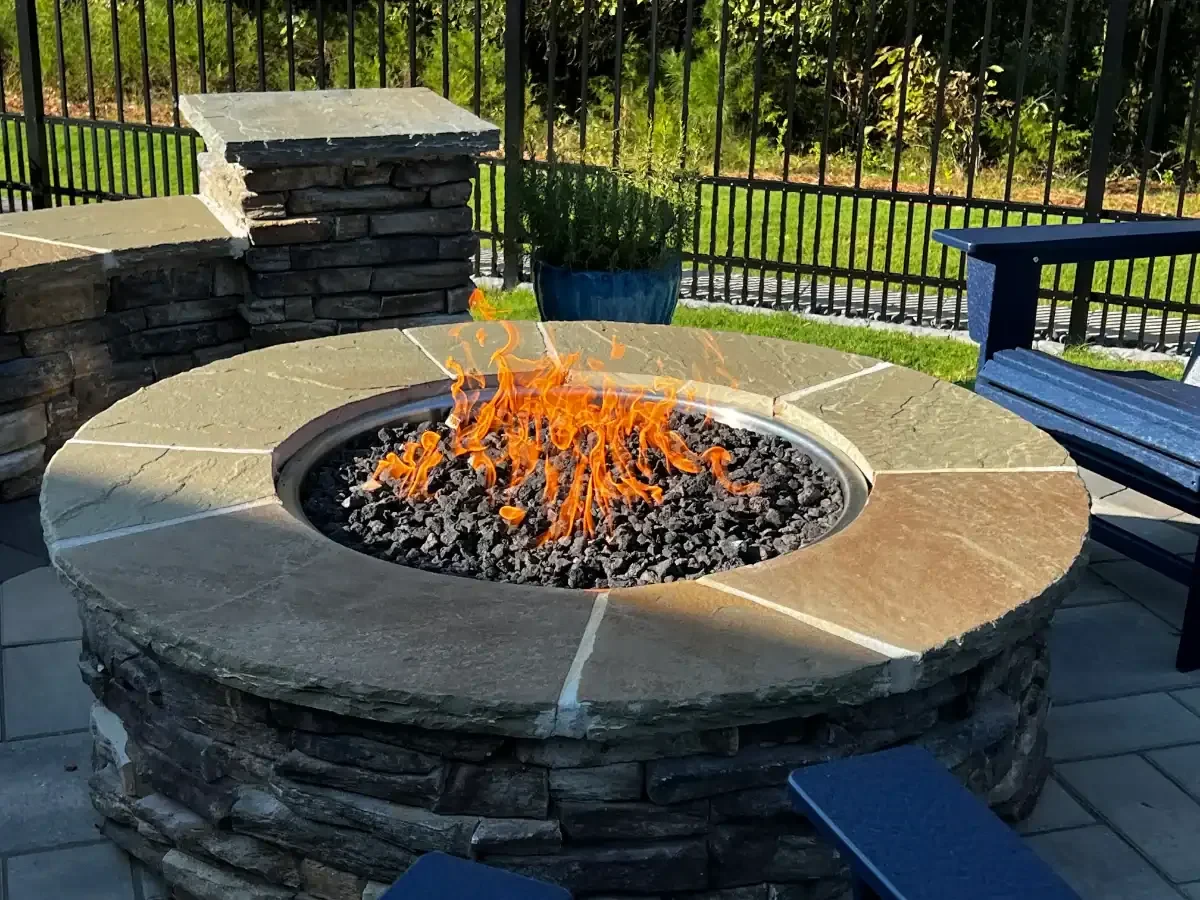
The structure also works as a frame for other features. Want to add a fire pit? Position it near the pergola so you have overhead coverage and a defined gathering area. Planning a hot tub? A pergola provides privacy screening and a sense of enclosure. Thinking about an outdoor bar? The pergola gives you a place to hang lights, mount a TV, or create a covered serving area.
Whatever you’re planning, the pergola acts as the anchor. It’s the element that pulls everything else together and makes your backyard feel like a designed space instead of a collection of random features.
Want live answers?
Connect with a Union Landscaping and Hardscape expert for fast, friendly support.
Pergola Design Ideas That Fit Your Style and Function
Pergolas aren’t one-size-fits-all. The design you choose should match your home’s architecture, your personal style, and how you plan to use the space. Modern homes pair well with clean-lined pergolas made from aluminum or steel. Traditional homes look better with wood structures that have more decorative details.
Attached pergolas connect directly to your house, extending from the roofline or exterior wall. These work well for covering patios right off the back door. Freestanding pergolas sit independently in your yard, which gives you more flexibility in placement. You can position a freestanding pergola over a fire pit area, near a pool, or in a corner of the yard that needs definition.
Material choice affects both appearance and maintenance. Wood pergolas offer a classic look and can be stained or painted to match your home. Cedar and redwood are popular because they resist rot and insects naturally. Pressure-treated pine costs less but requires more maintenance over time. Aluminum and vinyl pergolas need almost no upkeep and handle North Carolina’s humidity well, though some people prefer the warmth of natural wood. The decision comes down to your priorities—authentic appearance versus long-term maintenance.
Choosing Materials That Work in North Carolina's Climate
North Carolina’s climate isn’t easy on outdoor structures. You deal with humid summers, temperature swings, occasional freeze-thaw cycles, and heavy rainfall. The material you choose for your pergola needs to handle all of that without warping, rotting, or requiring constant maintenance.
Wood is the traditional choice, and it works well if you select the right type. Cedar is naturally resistant to moisture and insects, which makes it ideal for outdoor structures in humid climates. It weathers to a silver-gray if left untreated, or you can stain it to maintain the original color. Redwood offers similar benefits but costs more and isn’t always locally available. Pressure-treated pine is the budget option—it’s affordable and widely available, but it needs regular sealing to prevent moisture damage.
If you want to avoid wood maintenance entirely, aluminum and vinyl are solid alternatives. Aluminum pergolas won’t rust, warp, or need painting. They’re lightweight, which makes installation easier, and they come in colors that mimic wood grain if you want a natural look without the upkeep. Vinyl offers similar low-maintenance benefits and resists UV damage, which prevents fading over time.
Steel pergolas provide a modern, industrial aesthetic. They’re incredibly strong and can support heavier features like ceiling fans or hanging plants. The downside is that steel requires protective coating to prevent rust, especially in humid environments. If you go with steel, make sure it’s powder-coated or galvanized.
Composite materials are another option gaining popularity. These combine wood fibers with plastic polymers to create a material that looks like wood but resists moisture, insects, and rot. Composite pergolas cost more upfront but eliminate most maintenance concerns. They’re particularly good for homeowners who want the appearance of wood without the time investment of staining and sealing.
When selecting materials, also consider how they’ll integrate with your existing hardscaping. If you have a stone patio, a wood pergola might provide nice contrast. If your outdoor space already features metal furniture or modern finishes, an aluminum pergola could tie everything together visually. The goal is creating cohesion between all your outdoor elements so the space feels designed, not thrown together.
Integrating Pergola Lighting for Ambiance and Function
A pergola without lighting is only useful during daylight hours. If you want to actually use your outdoor space in the evenings—which is when most people have free time—you need to plan for lighting from the beginning. The right lighting extends your outdoor season, creates ambiance, and makes the space functional after sunset.
String lights are the most popular option for a reason. They’re easy to install, affordable, and create instant atmosphere. Edison bulbs give a warm, vintage feel. LED string lights use less energy and last longer. You can drape them across the pergola beams in straight lines for a clean look, or create a crisscross pattern for more visual interest. The soft glow makes the space feel inviting without being too bright.
For more focused lighting, consider recessed LED fixtures mounted in the pergola beams. These provide downward illumination for dining or cooking areas without taking up visual space. You get functional light where you need it while keeping the overhead structure clean and uncluttered. Recessed lights work especially well over outdoor kitchens or dining tables where you need to see what you’re doing.
Pendant lights and chandeliers add a decorative element while providing strong illumination. Hanging a weather-resistant chandelier from the center of your pergola makes a statement and turns the space into an outdoor room that rivals your interior. Just make sure any hanging fixtures are rated for outdoor use and can handle moisture and temperature changes.
Wall sconces mounted on pergola posts offer another lighting layer. They provide ambient light at eye level, which helps define the space’s boundaries and makes it feel more enclosed. Sconces come in styles ranging from traditional lanterns to modern geometric designs, so you can match them to your overall aesthetic.
If you want flexibility, install dimmers or smart lighting controls. Being able to adjust brightness based on the occasion makes a huge difference. Bright light works for cooking and entertaining large groups. Softer light creates a more intimate atmosphere for quiet evenings or small gatherings. Smart controls let you change settings from your phone, set schedules, or even adjust colors if you’re using RGB LED options.
Don’t forget about landscape lighting around the pergola. Uplighting the posts from ground level creates dramatic shadows and highlights the structure’s architecture. Path lights leading to the pergola make the space accessible and safe after dark. Combining multiple lighting types—overhead, ambient, task, and landscape—gives you the most versatile and functional outdoor space.
Making Your Backyard Work for How You Actually Live
A pergola isn’t just about adding a structure to your yard. It’s about creating a space you’ll actually use—one that fits how you live, matches your style, and solves the problems that keep you from enjoying your outdoor area now. Whether that’s lack of shade, undefined space, or just needing a reason to spend time outside, a well-designed pergola addresses those issues.
The best pergola designs consider both form and function. They provide shade and weather protection while looking good and complementing your home’s architecture. They create defined areas for specific activities without making your yard feel chopped up. And they integrate features like lighting and landscape elements so everything works together as a complete outdoor living space.
If you’re ready to transform your backyard in Monroe, Mecklenburg County, NC or Union County, NC into an outdoor oasis that works for your lifestyle, we design and install custom pergolas that blend expert craftsmanship with personalized attention to what you actually need from your outdoor space.