
You’re dealing with runoff every time it rains. The soil shifts, the grass won’t grow where you need it, and that slope in your backyard is just sitting there, unusable. Maybe you’ve noticed water pooling near your foundation, or you’re tired of watching your landscaping investment wash down the hill.
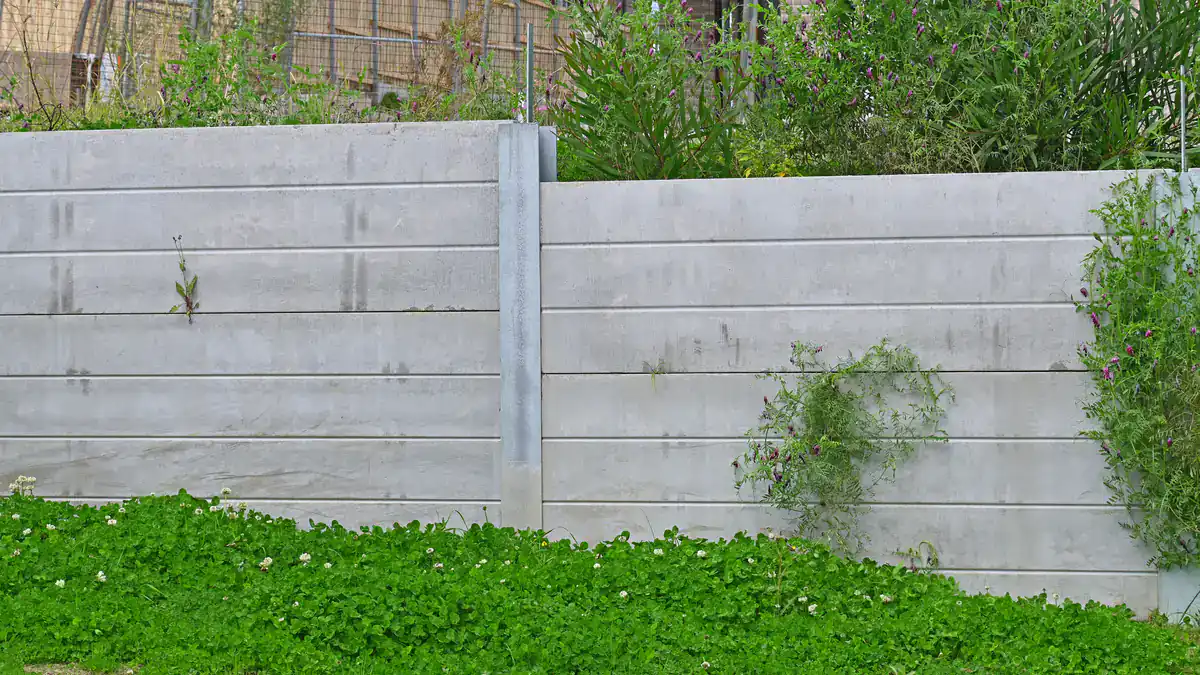
A properly installed retaining wall in Marvin, NC does more than hold back dirt. It redirects water away from your foundation, prevents up to 70% of soil erosion on sloped terrain, and converts that unusable hillside into level ground you can actually use. That means space for a patio, a garden bed, or just a flat yard where your kids can play without rolling downhill.
Properties with well-designed hardscape features see value increases between 10-15%. But the real benefit shows up when you’re not calling a foundation repair company or replanting the same flower bed for the third time this year. You get outdoor living spaces that work the way you need them to, without the constant maintenance headaches that come with unmanaged slopes.
Union Landscaping and Hardscape is a family-owned company based in Monroe, serving Marvin and the surrounding Union County area. We specialize in custom hardscaping that actually works with North Carolina’s clay soil and weather patterns, not against them.
Marvin’s climate brings 43 inches of rain annually, which is above the national average. That means your retaining wall needs proper drainage design, the right materials for freeze-thaw cycles, and installation that accounts for how clay soil shifts and settles. We’ve been doing this work locally since 2021, and we know what holds up here and what doesn’t.
You’re not getting a crew that learned hardscaping in a different climate. You’re getting people who understand what Marvin homeowners deal with and how to build structures that last 50-100 years in these specific conditions.
We start with a free consultation at your property. You show us the problem areas, we assess the slope, drainage patterns, and soil conditions, and we talk through what you want to use the space for. No pressure, just information.
Once you decide to move forward, we design a retaining wall system that matches your property’s needs. That includes selecting the right materials—whether that’s concrete retaining wall blocks, natural stone, or another option that fits your aesthetic and budget. We map out drainage solutions, calculate load requirements, and plan the excavation.
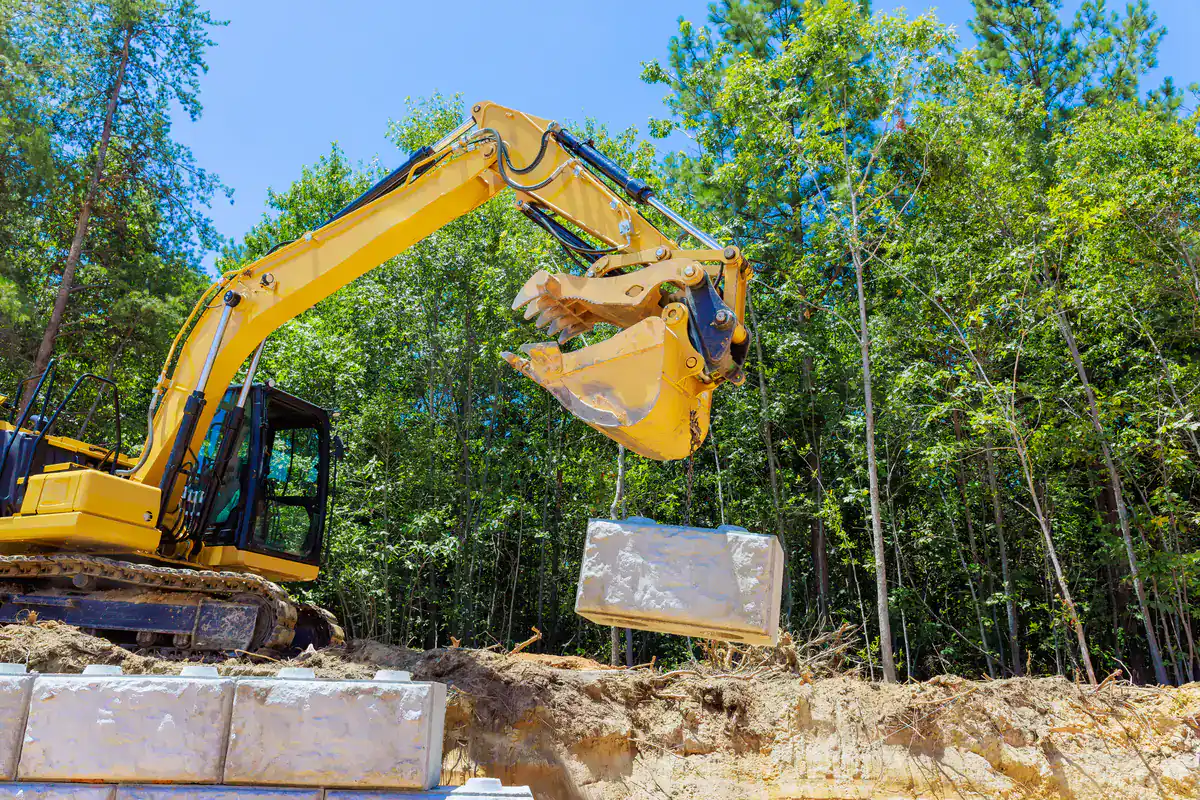
Installation starts with proper site preparation. We excavate to the right depth, create a stable base with compacted gravel, and ensure the drainage system is in place before the first block goes down. Each course of retaining wall blocks gets leveled and secured correctly. We backfill with the right materials and grade everything so water moves where it should.
The timeline depends on the wall’s size and complexity, but you’ll know the schedule upfront. We keep you informed throughout the process, and we don’t leave until the site is clean and the job is done right.
Ready to get started?
A retaining wall installation in Marvin, NC includes more than stacking blocks. You get a complete system designed for your property’s specific drainage and soil conditions.
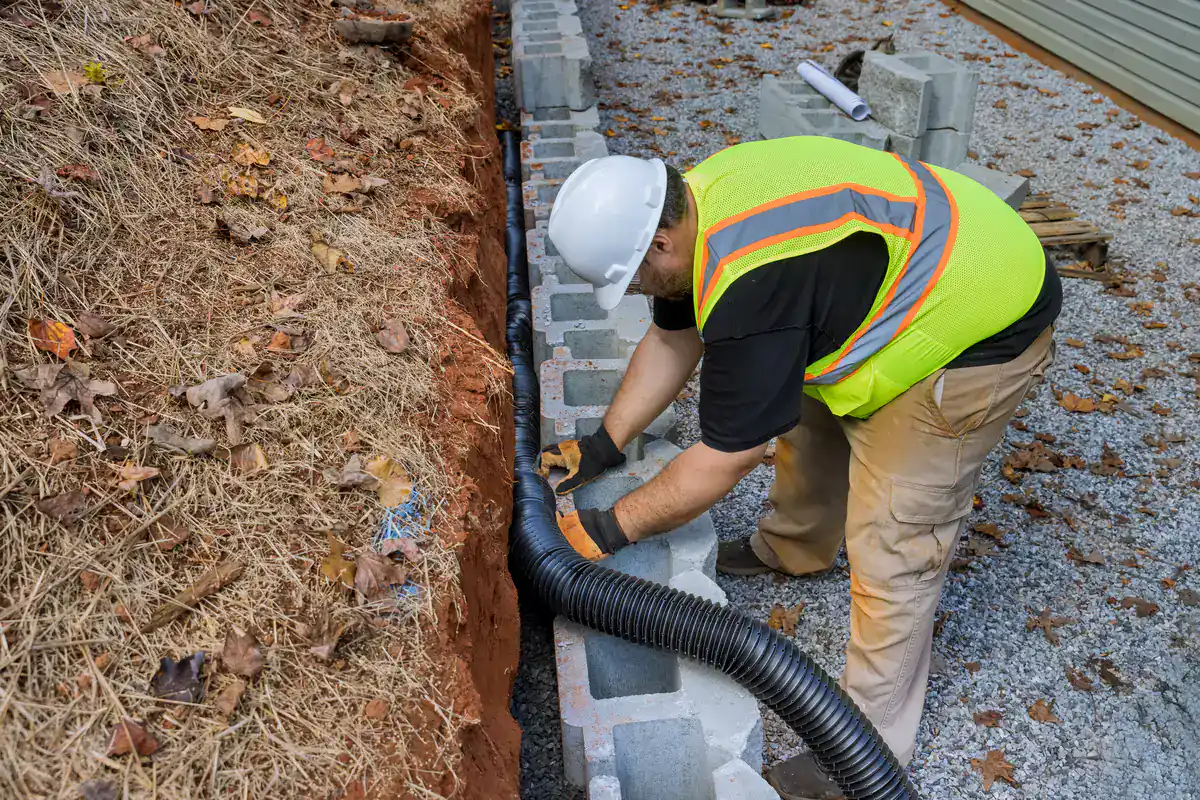
That starts with proper excavation and base preparation. The base determines whether your wall lasts five years or fifty. We use compacted gravel and ensure the foundation is stable enough to handle the load. Then comes the drainage system—perforated pipes, gravel backfill, and grading that directs water away from both the wall and your home’s foundation.
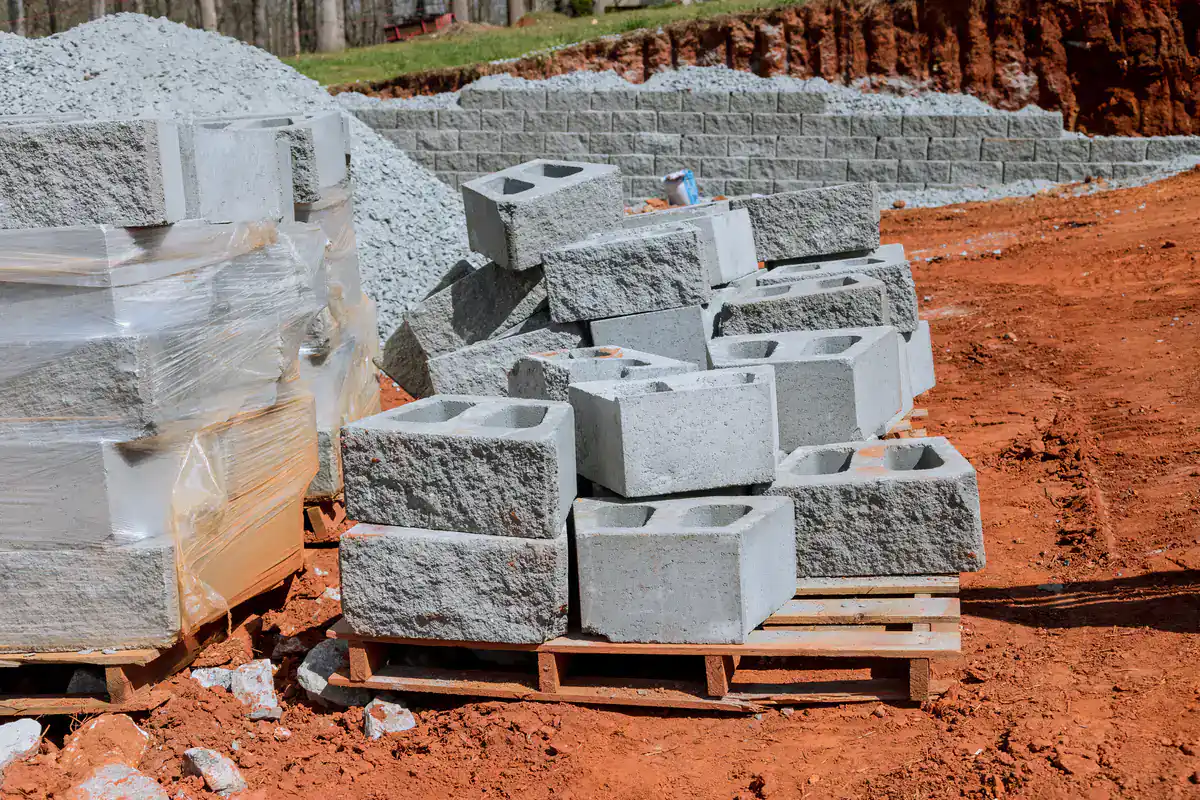
Material selection matters here. Concrete retaining wall blocks offer durability and design flexibility. Natural stone provides a different aesthetic. We’ll walk through options that make sense for your budget and the wall’s function. You’ll also get a structure that’s engineered for the height and load requirements of your specific slope.
Marvin’s clay soil expands and contracts with moisture changes, which is why proper backfill and drainage are critical. We account for that in every installation. The result is a block wall retaining wall that prevents erosion, protects your foundation, and creates usable outdoor living spaces without needing constant repairs or adjustments.
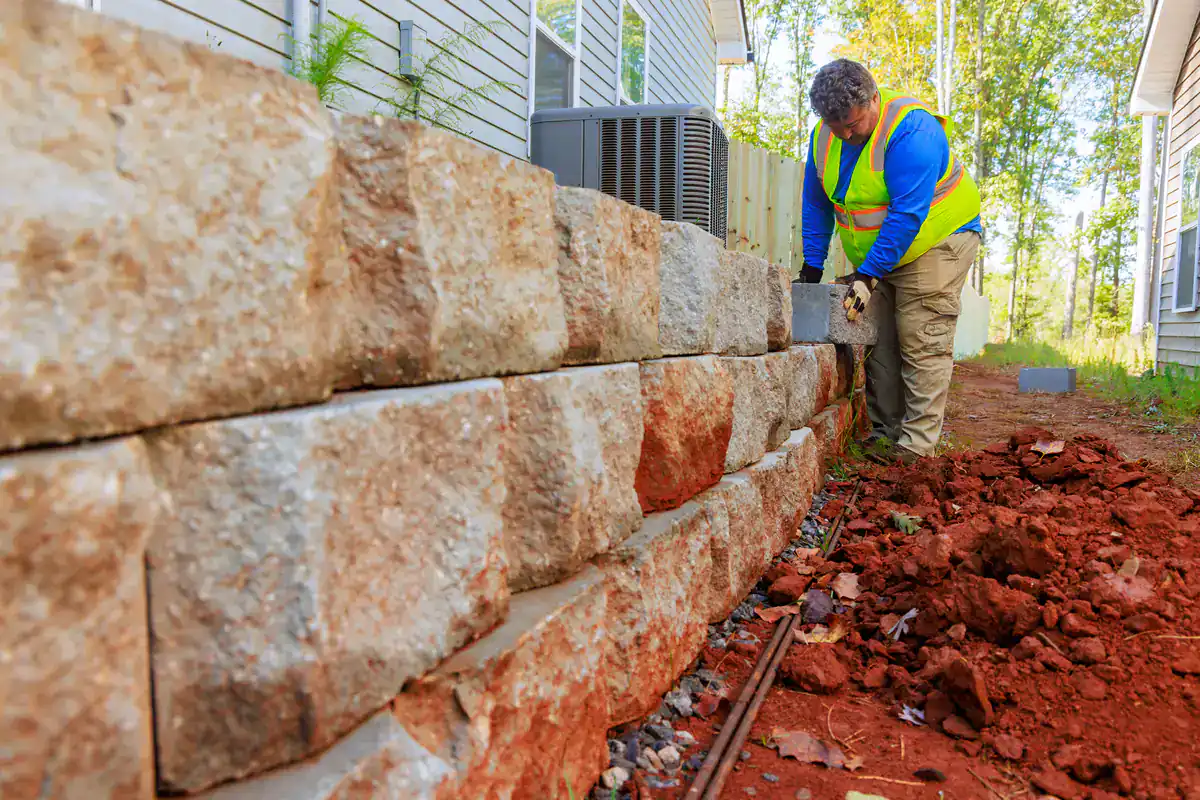
A properly installed retaining wall in Marvin, NC typically lasts 50-100 years, depending on materials and site conditions. The lifespan comes down to three things: the quality of materials used, the installation process, and how well the drainage system manages water.
Concrete retaining wall blocks are engineered for durability and can handle North Carolina’s freeze-thaw cycles without cracking or shifting. Natural stone offers similar longevity when installed correctly. The real threat to any retaining wall isn’t the blocks themselves—it’s water pressure building up behind the wall.
That’s why drainage design matters more than most homeowners realize. We install perforated drain pipes and proper backfill material to keep water from accumulating behind the wall. In Marvin’s clay soil, this is especially important because clay doesn’t drain well on its own. Without proper drainage, even the best materials will fail early. With it, you’re looking at decades of performance without major issues.
Retaining wall installation costs in Marvin, NC typically range from $3,500 to $9,400 for most residential projects, with the national average around $6,300. Your actual cost depends on the wall’s height, length, materials, and site complexity.
A basic retention wall using standard concrete blocks on a straightforward slope costs less than a tall, curved wall with natural stone and complex drainage requirements. Site access matters too—if equipment can’t easily reach the area, labor costs increase. Soil conditions play a role as well. Clay soil requires more careful base preparation than sandy soil.
Material choice impacts price significantly. Concrete retaining wall blocks offer good value and durability. Natural stone costs more but provides a different look. Engineered block systems with built-in drainage features fall somewhere in between. During your free consultation, we’ll assess your specific site and give you a clear estimate based on what your property actually needs. No guessing, no surprise costs later.
Yes, but only if it’s designed with drainage in mind from the start. A retaining wall doesn’t just hold back soil—it redirects water flow and prevents pooling near your foundation.
The key is installing a proper drainage system behind the wall. We use perforated drain pipes at the base, surrounded by gravel that allows water to flow freely. The pipe channels water away from the wall and your home’s foundation. We also grade the area so surface water moves in the right direction instead of pooling against the wall.
In Marvin, NC, where annual rainfall exceeds 43 inches, this drainage design is critical. Clay soil doesn’t absorb water quickly, which means runoff needs somewhere to go. A well-designed retaining wall system creates that path. You’ll see less erosion, no more pooling water after storms, and better protection for your foundation. But if the wall is built without addressing drainage, you’re just moving the problem, not solving it.
It depends on the wall’s height and location. In Marvin, NC, retaining walls over a certain height typically require a permit, and walls near property lines may need additional approval.
Local building codes exist because retaining walls affect drainage patterns, and poorly built walls can impact neighboring properties. Walls over four feet tall usually need engineering stamps and permits. Walls near property lines might require setback compliance or neighbor notification.
We handle permit research and applications as part of the installation process. During your consultation, we’ll assess whether your project needs permits based on the wall’s planned height, location, and local regulations. If permits are required, we’ll walk you through what’s needed and manage the submission. This protects you from code violations and ensures the work meets structural requirements. It also means you won’t have issues down the road if you sell your property and the buyer’s inspector checks permit history.
Concrete retaining wall blocks and natural stone both perform well in North Carolina’s climate, but they serve slightly different needs. Concrete blocks offer consistency, engineered strength, and design flexibility. Natural stone provides a more organic look and can be sourced locally.
Concrete blocks are manufactured to handle specific load requirements and come in various styles and colors. They’re designed with features that make installation more precise and drainage easier to manage. They handle freeze-thaw cycles well and don’t shift over time when installed correctly.
Natural stone works beautifully for shorter walls and decorative applications. It blends into the landscape naturally and ages well. The tradeoff is that installation takes more time, and achieving consistent structural integrity requires more skill. For taller walls or areas with significant load requirements, engineered concrete blocks are usually the better choice. We’ll recommend materials based on your wall’s function, your aesthetic preferences, and your budget. Both options last decades in Marvin’s climate when installed with proper drainage and base preparation.
You need a retaining wall if you’re seeing erosion, water pooling near your foundation, or you have sloped areas you can’t use. These are the signs that your property’s grading isn’t managing water and soil movement effectively.
Look for exposed tree roots, soil washing onto driveways or patios, or areas where grass won’t grow because the ground is too steep or unstable. If you notice water running toward your house instead of away from it during storms, that’s another indicator. Cracks in your foundation or basement moisture problems can also stem from poor slope management.
In Marvin, NC, where clay soil and heavy rainfall create erosion issues, retaining walls serve both functional and aesthetic purposes. They prevent soil loss, protect foundations, and create level outdoor living spaces where slopes previously made the area unusable. During a free consultation, we’ll assess your property’s drainage patterns, soil conditions, and slope angles. We’ll show you where a retaining wall makes sense and what it would accomplish. Sometimes the solution is a single wall. Other times, terraced walls work better. You’ll know exactly what your property needs before any work begins.
Other Services we provide in Marvin