Summary:
Understanding Different Paver Materials and Their Benefits
Not all pavers are created equal, and your choice affects everything from upfront costs to long-term maintenance. The three main options each have distinct advantages depending on your priorities and budget.
Concrete pavers offer the most versatility and value. They come in countless colors, shapes, and textures, often mimicking natural stone at a fraction of the cost. You’ll pay around $8 to $15 per square foot, making them budget-friendly for larger projects.
Brick pavers bring classic charm and exceptional durability. They develop character over time and resist staining better than concrete. Expect to invest $10 to $20 per square foot, but they often last longer with minimal maintenance.
Natural Stone vs Manufactured Pavers: Which Fits Your Project
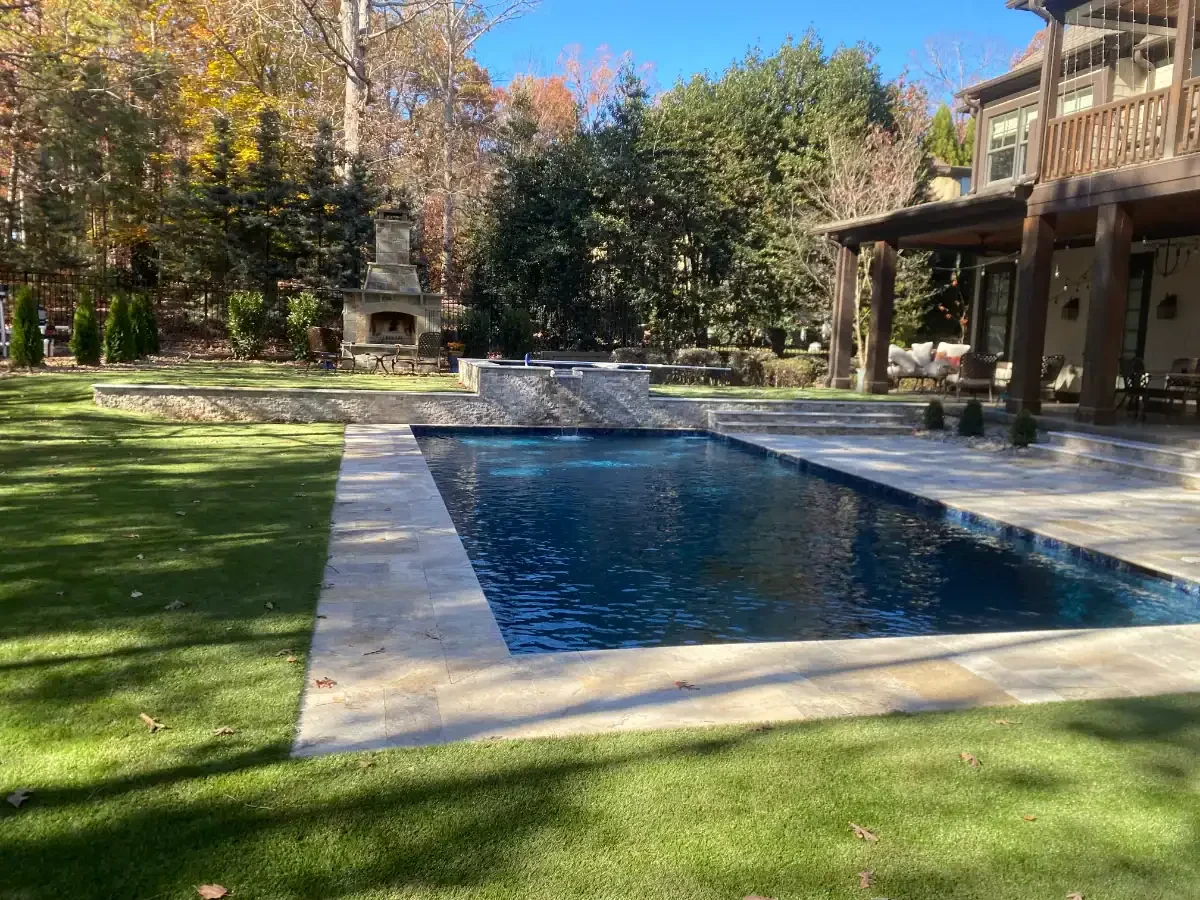
Natural stone pavers represent the premium option, typically running $15 to $30 per square foot. Materials like flagstone, limestone, and travertine offer unique textures and colors that you simply can’t replicate with manufactured options. Each piece has its own character, creating truly one-of-a-kind installations.
The trade-off comes in cost and installation complexity. Natural stone requires more skilled handling during installation, and the irregular shapes can make the process more time-consuming. However, the results speak for themselves—natural stone patios often become the focal point of outdoor spaces.
Manufactured pavers, whether concrete or clay brick, offer consistency and predictability. Every piece matches exactly, making installation faster and patterns more precise. This consistency also means easier repairs down the road—you can replace individual pavers without worrying about color or size variations.
Climate considerations matter too. In Charlotte’s humid environment with temperature swings, both natural stone and quality manufactured pavers perform well. The key lies in proper installation with appropriate drainage, especially given our clay soil conditions.
Your choice often comes down to budget versus aesthetics. Natural stone provides unmatched beauty but requires a bigger investment. Manufactured pavers deliver excellent performance and appearance at more accessible price points, making them popular for larger projects like driveways or expansive patios.
Permeable Pavers: Managing Charlotte's Heavy Rainfall
Charlotte receives significant rainfall throughout the year, making drainage a critical consideration for any paver project. Permeable pavers address this challenge by allowing water to filter through the surface rather than running off into storm drains or pooling on your patio.
These specialized pavers feature wider joints filled with permeable materials, or they’re manufactured with tiny holes that allow water infiltration. The result is a surface that handles heavy downpours while reducing runoff that can cause erosion around your property.
Permeable pavers work particularly well in Charlotte because they help manage our clay soil’s tendency to shed water rather than absorb it. Traditional solid surfaces can create drainage problems, especially on sloped lots common in our area. Permeable options let you enjoy beautiful hardscaping while being environmentally responsible.
Installation requires specific techniques to ensure proper drainage function. The base preparation differs from traditional pavers, incorporating graded stone layers that facilitate water movement. This specialized installation makes working with experienced contractors essential—improper installation can negate the drainage benefits entirely.
Cost-wise, permeable pavers typically run 10-20% more than traditional options, but they can eliminate the need for additional drainage infrastructure. In many cases, this makes them cost-neutral while providing environmental benefits. They’re especially valuable for driveways and larger patio areas where water management matters most.
Maintenance involves occasional cleaning to prevent the joints from clogging with debris. A simple pressure washing once or twice a year keeps the drainage system functioning properly. This small investment in maintenance preserves both the appearance and functionality of your permeable paver installation.
Want live answers?
Connect with a Union Landscaping and Hardscape expert for fast, friendly support.
The Professional Installation Process: What to Expect
Proper paver installation involves far more than laying stones on sand. The process requires precision at every step, starting with excavation and site preparation that accounts for Charlotte’s challenging clay soil conditions.
We begin by marking utilities and excavating to the proper depth. This isn’t just digging a hole—it’s creating a foundation system that will support your pavers for decades. In our area, this means removing all organic material and addressing clay soil’s expansion and contraction characteristics.
The base preparation phase determines your project’s long-term success. We install and compact multiple layers of graded stone, creating proper drainage slopes and a stable foundation that won’t shift over time.
Site Preparation and Base Installation: The Foundation of Success
Everything starts with proper excavation. We remove grass, roots, and organic debris that would decompose and create soft spots over time. Even small amounts of organic matter can cause settling issues years later, making thorough site preparation crucial.
Charlotte’s clay soil presents unique challenges that we know how to handle. Clay expands when wet and contracts when dry, creating movement that destroys improperly prepared installations. Our preparation involves specific compaction techniques and base materials that accommodate this soil behavior.
The base installation typically involves multiple layers of crushed stone, each compacted to specific densities. The bottom layer provides structural support, while upper layers create the precise grade and slope needed for drainage. This isn’t something you can achieve with hand tools—professional compaction equipment is essential.
Proper slope installation ensures water flows away from your home and doesn’t pool on the paver surface. The standard slope of one inch per eight feet might seem minimal, but it’s critical for preventing water damage. We use laser levels and string lines to achieve these precise grades across the entire installation area.
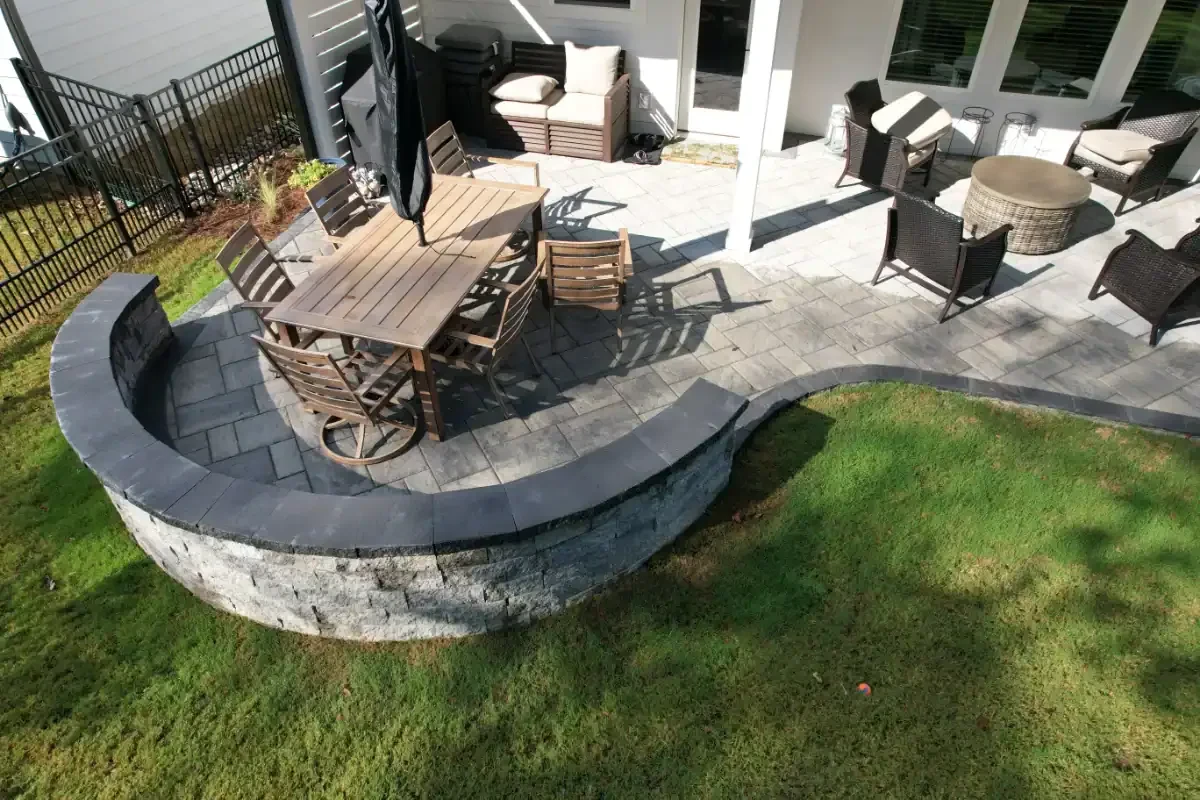
Edge restraints get installed during base preparation, creating boundaries that prevent paver movement over time. These aren’t visible in the finished project, but they’re essential for maintaining the installation’s integrity. We use commercial-grade restraints that won’t shift or deteriorate.
Paver Installation and Final Compaction: Bringing It All Together
With the base properly prepared, paver installation begins with laying a precise sand bed. This sand layer provides the final leveling surface and allows for minor adjustments during paver placement. The sand gets screeded to exact elevations using guides that ensure consistent thickness across the entire area.
Paver placement follows specific patterns and techniques that ensure proper interlock between adjacent units. We work from established reference lines, checking alignment and elevation continuously throughout the process. Small adjustments during installation prevent major issues that would require removal and reinstallation.
Joint sand application happens after all pavers are placed and initially compacted. This sand fills the spaces between pavers, preventing lateral movement and helping distribute loads across the entire system. The type of joint sand affects long-term performance—polymeric sands resist washout better than regular sand, especially important in our rainy climate.
Final compaction uses specialized equipment with protective pads to prevent surface damage while activating the interlock between pavers. Multiple passes in different directions ensure uniform compaction across the entire surface. This process locks everything into its final position and reveals any areas that need adjustment.
Quality control continues throughout installation. We use string lines and levels to maintain consistent alignment and elevation, making small corrections as needed. This attention to detail during installation prevents problems that would be expensive to fix later.
The final cleanup and inspection ensure your new paver installation meets our professional standards. We sweep away excess sand, check for any loose or uneven pavers, and verify that drainage slopes function properly. This final step ensures you receive an installation that will perform well for decades.
Maintaining Your Paver Investment for Long-Term Beauty
Your paver installation represents a significant investment in your property’s beauty and value. Proper maintenance keeps it looking great and functioning properly for decades, but the requirements are simpler than many homeowners expect.
Regular cleaning involves nothing more than sweeping and occasional pressure washing. Most pavers need sealing every three to five years, depending on traffic and weather exposure. This simple maintenance preserves color and provides stain resistance.
We can handle sealing and repairs, but understanding the basics helps you protect your investment. When you work with us at Union Landscaping and Hardscape, you get guidance on maintaining your specific installation for optimal performance and appearance.